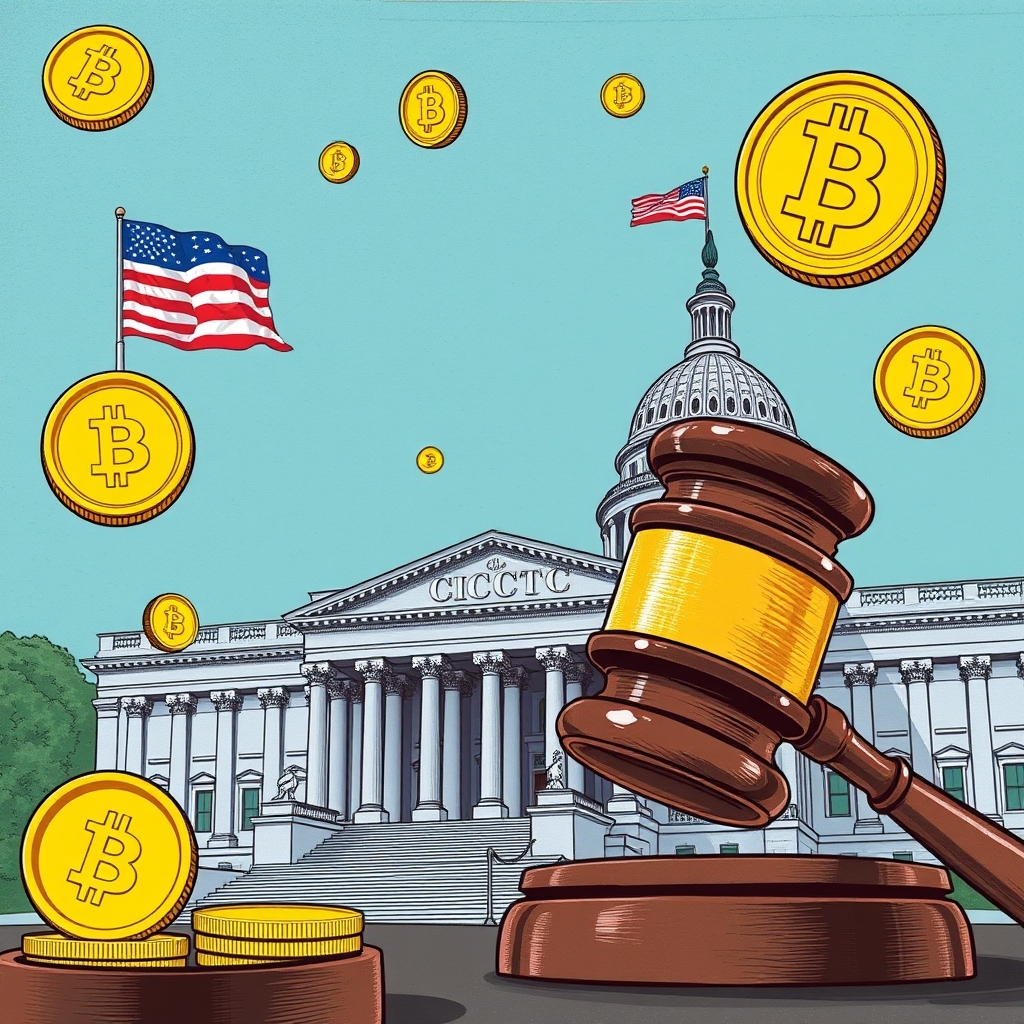
The fight over who regulates prediction markets just gained a powerful voice. President Donald Trump said it is critically important that the Commodity Futures Trading Commission hold sole authority over prediction markets, pushing back against state officials who have tried to assert their own oversight. For a sector where crypto rails and event contracts increasingly overlap, the question of which regulator is in charge has real consequences for how — and where — these markets can operate.
What Happened
Trump publicly backed the CFTC as the single authority over prediction markets and took aim at several state officials who have moved to regulate or restrict the platforms. The comments land squarely in an active jurisdictional dispute between federal and state regulators over how event-based contracts should be supervised.


Prediction markets, where users trade contracts tied to the outcome of elections, economic data, and other events, have grown quickly and now sit in a gray zone between commodities regulation, gambling law, and securities oversight. The push for a single federal authority is an attempt to settle that ambiguity in the CFTC’s favor.
What It Means for Traders
Regulatory clarity is usually a tailwind for any market, even when the rules themselves are strict. A single federal supervisor would reduce the risk of a state-by-state patchwork that fragments liquidity and forces platforms to block users by geography. For traders, that can mean deeper markets and fewer sudden access changes.
The crypto angle is direct. Many prediction-market platforms settle in stablecoins or lean on blockchain infrastructure, so the regulatory framework that governs them shapes a fast-growing slice of on-chain activity. A clear CFTC mandate could give crypto-native event platforms a more defined path to operate inside the United States.
The Bigger Picture
This is part of a broader pattern of crypto-adjacent activity being pulled into established regulatory frameworks rather than left in legal limbo. Whoever wins the turf war sets the tone for how event contracts, and the digital-asset rails beneath them, are treated for years to come.
The federal-versus-state tension is not unique to prediction markets — it echoes long-running disputes over how the entire crypto industry should be supervised. A decisive outcome here could become a reference point for other corners of the market still waiting for clear jurisdictional lines.
Conclusion
Presidential backing for CFTC primacy raises the odds that prediction markets get a unified federal framework rather than a fractured state-level one. For traders and the crypto platforms powering these markets, the direction of that decision matters more than the politics around it. Clear rules, even demanding ones, tend to be easier to build on than uncertainty.
This article is informational only and does not constitute financial advice.