


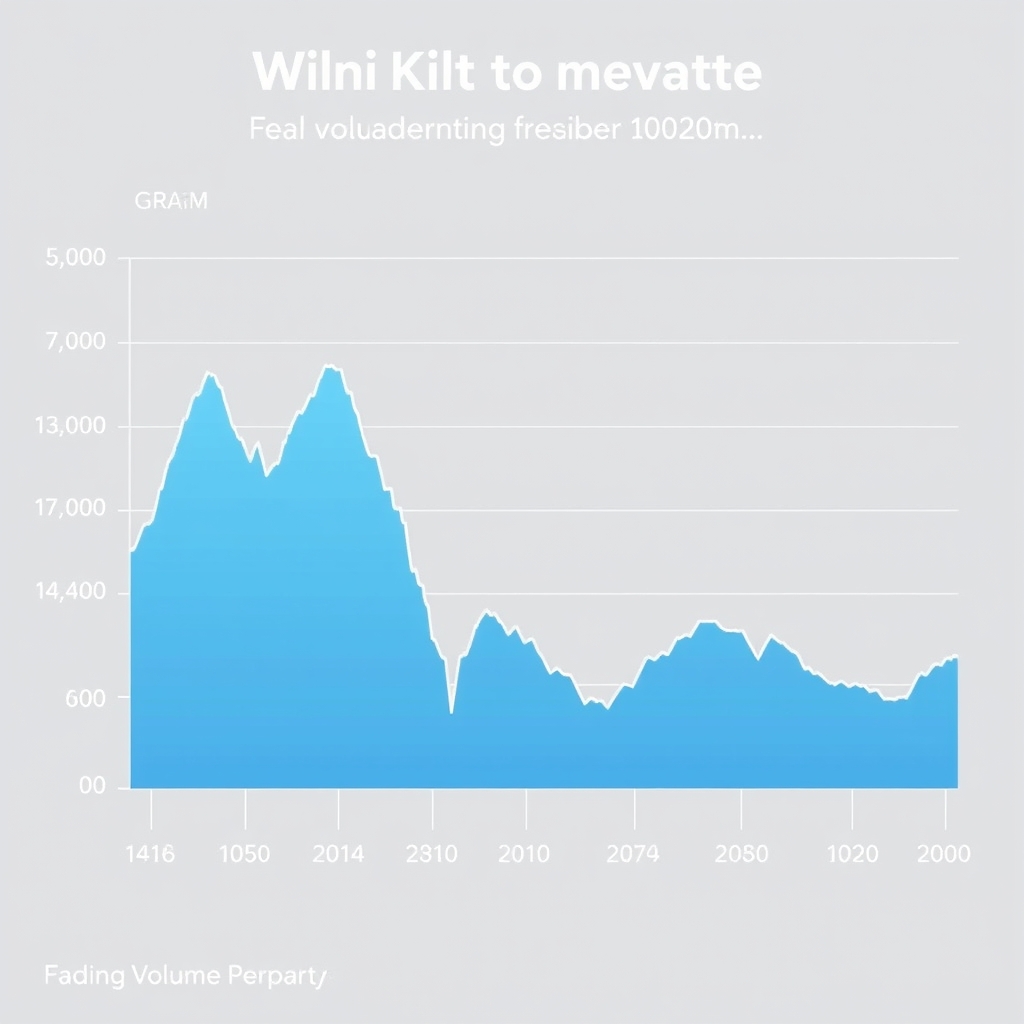
Centralized crypto exchange volumes fell 39% quarter-on-quarter in the first quarter, a slide that points to a sustained crypto winter rather than a brief cooldown. For traders, thinning volume is not just a sentiment story. It changes how prices move, how orders fill and how much slippage a position quietly costs.
What Happened
A first-quarter market report put centralized exchange trading volume down 39% from the previous quarter, with March the weakest month at roughly $800 billion in spot activity. That was the lowest monthly total since November 2023, marking a clear break from the busier stretches that defined the prior cycle.


The decline was broad rather than isolated to one venue. Spot interest cooled across major exchanges as liquidity thinned out, a pattern that tends to feed on itself. When fewer participants trade, market makers widen quotes, and wider quotes discourage the next round of would-be buyers and sellers.
Falling volume also lines up with a broader risk-off mood. Cautious macro conditions and fading retail enthusiasm both pull activity out of the market, leaving order books thinner than headline prices alone would suggest.
What It Means for Traders
Thin liquidity is a double-edged condition. It can amplify moves in both directions, so a modest flow of buy or sell orders pushes price further than it would in a deep market. Traders who size positions for a liquid book can find themselves facing outsized slippage when they try to enter or exit.
Lower volume also raises the weight of every large player. In a quiet market, a single sizable order or liquidation can set the tone for hours, and technical levels break more easily when there is little resting depth to defend them. That environment rewards patience and punishes crowded, leveraged bets.
For anyone running systematic or high-frequency strategies, a 39% volume drop can meaningfully change execution assumptions. Spreads that were negligible in a busy quarter become a real drag on returns, and backtests calibrated to deeper markets may overstate what is achievable now.
The Bigger Picture
Quarters like this are a familiar part of crypto’s cycle. Volume tends to contract after a period of excess, wash out weaker participants, and eventually rebuild from a smaller base. The current slowdown fits that rhythm, even if the timing of any recovery is impossible to pin down.
The quieter backdrop also reshapes the competitive landscape. Exchanges that leaned on fee revenue from frantic retail trading feel the squeeze first, while venues with diversified products and institutional flow are better positioned to ride out the lull. Consolidation pressure often builds in exactly these stretches.
There is a constructive read as well. Sustained low-volume periods historically coincide with accumulation by longer-term participants who are less concerned with day-to-day churn. Quiet order books are frustrating for active traders but are not, on their own, a signal that the market is broken.
Conclusion
A 39% drop in exchange volume is a reminder to trade the market that exists, not the one from the last bull run. That means tighter risk controls, realistic slippage assumptions and respect for how quickly thin markets can whip in either direction. Volume eventually returns, and the traders who protect their capital through the quiet stretch are the ones with dry powder when it does.
This article is informational only and does not constitute financial advice.