


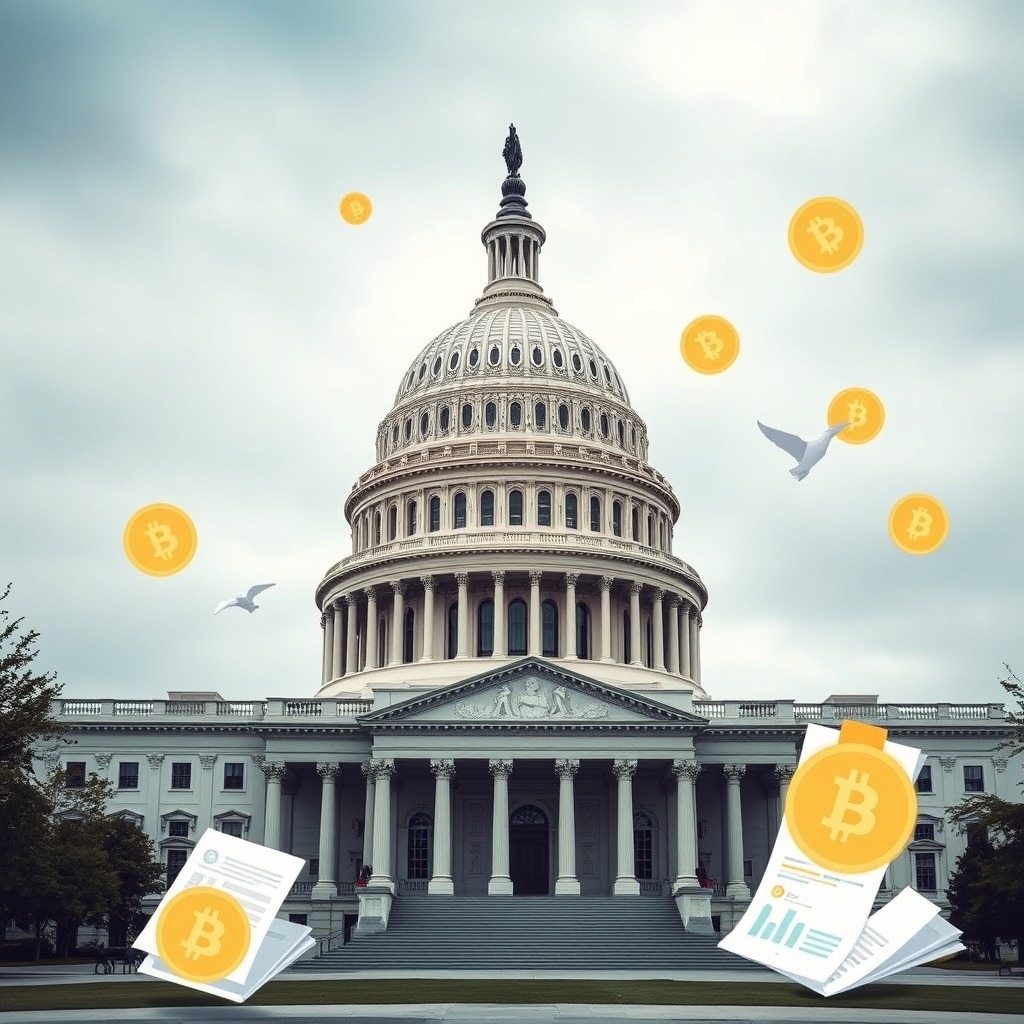
The US Senate has abandoned plans to vote on the CLARITY Act before its August recess, pushing the crypto market structure bill to mid-September at the earliest. With midterm election season approaching fast, the delay narrows an already tight window and leaves the industry’s biggest legislative priority in limbo. For traders, the uncertainty itself is now a market factor.
What Happened
Senate leadership confirmed that the chamber will not take up the CLARITY Act before lawmakers leave Washington, reversing an earlier expectation that a vote could happen this summer. Legislators are now expected to return to the bill after September 14, leaving a slim number of working days before election-season politics crowd out complex, industry-specific legislation.


The CLARITY Act is the centerpiece of the effort to define which digital assets are securities and which are commodities, and to divide oversight between the SEC and the CFTC. That question has hung over the US market for years, and each delay pushes resolution further out.
What It Means for Traders
Regulatory clarity is not an abstraction — it shapes where liquidity goes. A defined framework tells exchanges what they can list, tells institutions what they can custody, and tells token projects which rules apply. Until that framework exists, larger allocators tend to stay cautious, and that hesitation shows up as thinner conviction in US-linked markets.
The near-term read is muted rather than dramatic. Markets had not fully priced a summer vote, so the delay is more of a slow drip than a shock. But it does keep a structural discount on assets whose classification remains unresolved, and it prolongs the compliance gray zone that has pushed some activity offshore. We flagged the stakes when the bill hit its make-or-break moment earlier this year.
Traders should treat the September window as a genuine catalyst date. If the bill advances, expect a repricing in tokens and equities most exposed to US regulatory risk. If it stalls again into the midterms, the status quo of regulation-by-enforcement likely persists into next year.
The Bigger Picture
Market structure legislation has always been a coalition project, and its supporters have framed it as protection for builders as much as a rulebook for markets. That argument was central when Senator Lummis championed the CLARITY Act as a shield for DeFi developers, positioning clear rules as a way to keep innovation onshore rather than driving it abroad.
In the meantime, agencies keep filling the vacuum with their own interpretations, from custody guidance to broker-dealer expectations. The practical effect is that the rules are still being written case by case, as we saw with the SEC’s phased runway for self-custody broker-dealer rules. Legislative delay does not freeze policy — it just shifts who writes it.
Conclusion
The CLARITY Act is not dead, but its timeline has tightened and the political calendar is no friend to complex bills. Traders positioning around US regulatory risk should mark September as the next real test and keep an eye on whether momentum survives the recess. Until Congress acts, the market will keep pricing uncertainty — and uncertainty has a cost.
This article is informational only and does not constitute financial advice.