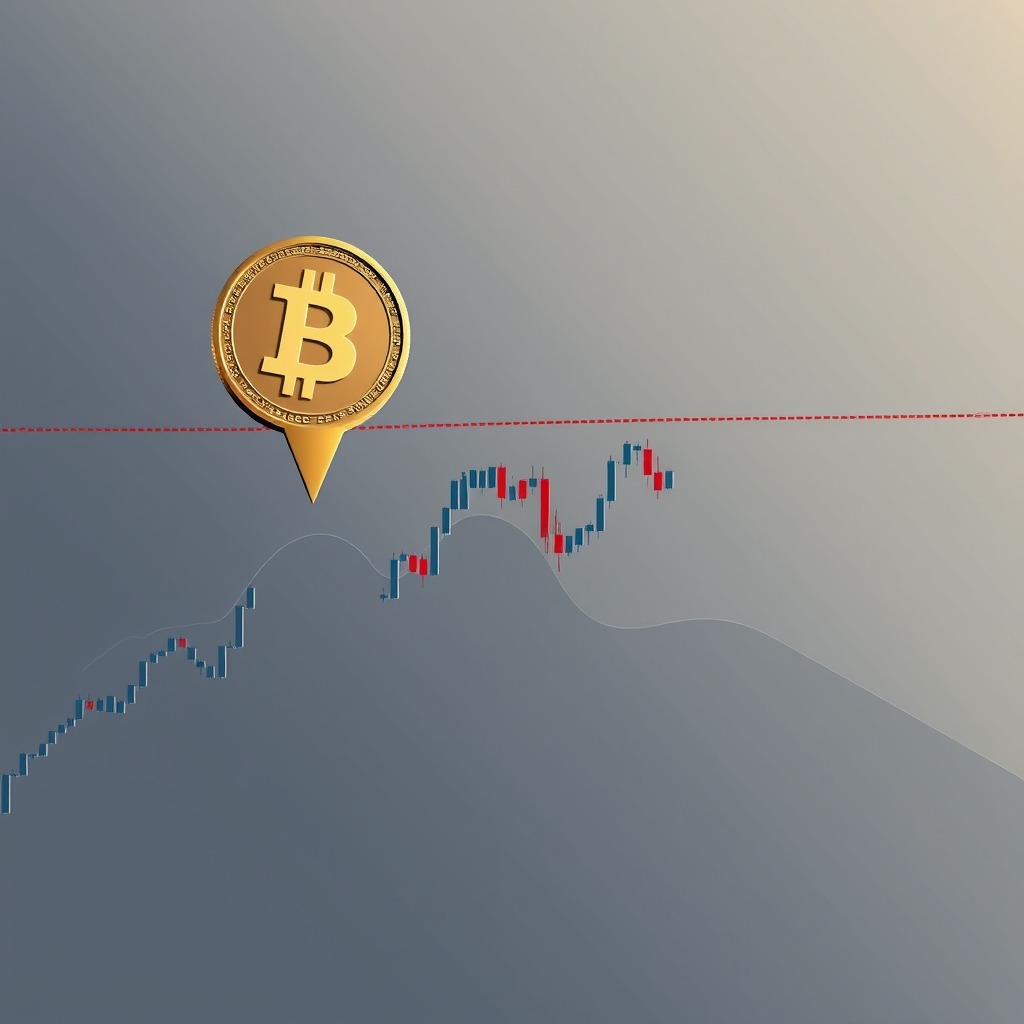
A large Bitcoin options expiry is bearing down on a market that has spent the week wedged between $75,000 and $80,000, and the positioning around those two strikes is now shaping how price behaves. Reported call exposure on Deribit is clustered at exactly those levels, which turns Friday’s settlement into a magnet as much as an event. For traders, the immediate story is not a forecast — it is mechanics, and understanding the mechanics is how you avoid being caught on the wrong side of a hedging move.
What Happened
Bitcoin slipped back below $78,000 mid-week after a hotter inflation print rattled risk assets broadly, dragging equities and gold lower at the same time. That move left BTC boxed inside a tight $75,000–$80,000 band heading into a heavy options expiry concentrated on Deribit, the dominant venue for crypto options.


The notable feature is where the open interest sits. Call exposure is stacked at the $75,000 and $80,000 strikes, the same boundaries price is already testing. When large amounts of contracts expire near the current spot, the dealers who sold those options have to adjust their hedges into settlement — and that hedging flow can either pin price to a level or exaggerate a breakout once a boundary gives way.
What It Means for Traders
The mechanic to understand here is dealer gamma. When market makers are short options near expiry, they hedge by buying dips and selling rips to stay neutral — behavior that tends to compress volatility and “pin” spot toward the strikes with the heaviest exposure. That is the pinning scenario, and it fits a market that keeps stalling at $75,000 and $80,000.
The opposite can also happen. If spot pushes cleanly through a strike where dealers are positioned the other way, hedging can flip from dampening moves to accelerating them, adding fuel to a breakout in either direction. That is why the hours around a concentrated expiry often look unusually quiet right up until they don’t. Traders watching this setup tend to focus on whether $80,000 caps rallies and whether $75,000 holds bids, treating a decisive move outside the band — rather than the round number itself — as the signal that matters.
Positioning-driven weeks also reward patience over conviction. Chasing a move inside a pinning range is how leveraged traders get chopped up, and this is the kind of tape where liquidations cluster. Our earlier look at how a large options expiry and “max pain” shape spot covers the same forces from a different angle.
The Bigger Picture
Zooming out, the expiry lands during a broader question about supply absorption — whether there is enough steady demand to soak up coins as Bitcoin repeatedly fails to reclaim $80,000. That is a slower, structural story than a single settlement, but it frames why these strikes have become such stubborn magnets. Thin conviction on both sides makes a market especially sensitive to derivatives flow.
Derivatives are also an ever-larger share of how price gets discovered. The growth of regulated and offshore venues means options and futures positioning increasingly leads spot, a shift underscored by the recent turf war over Bitcoin perpetual-style contracts. As institutional desks now drive the majority of spot flow, expiries like this one carry more weight over short-term price action than they did a few cycles ago.
The Takeaway
Friday’s expiry is less a directional catalyst than a stress test of a range that has held all week. Whether dealer hedging pins Bitcoin between $75,000 and $80,000 or amplifies the first clean break, the level that resolves the band — not the settlement headline — is what sets the next leg. Traders who understand the positioning behind the price will read the move faster than those watching only the candles.
This article is informational only and does not constitute financial advice.