


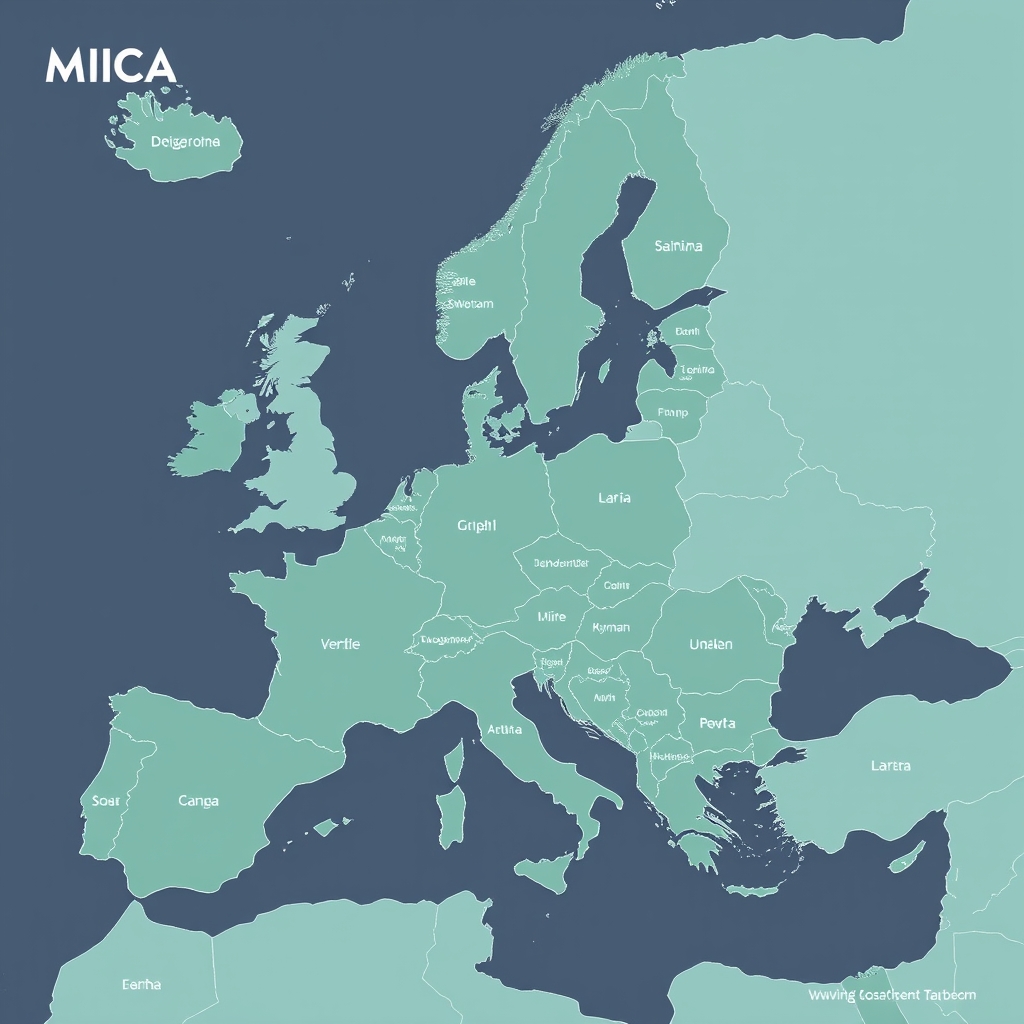
Europe’s crypto licensing clock has run out. As of July 1, 2026, the Markets in Crypto-Assets regulation’s transitional window has formally closed across all 30 EU and EEA member states, with roughly 244 authorized firms now holding the only legal passports to serve retail crypto clients across the bloc. Germany sits at the top of that list, and for traders operating in or through European venues, the composition of that authorized set matters more than most headlines suggest.
What Happened
MiCA is the European Union’s comprehensive framework governing crypto-asset service providers — exchanges, custodians, portfolio managers, and advisors operating within the single market. When the regulation came fully into force for crypto-asset service providers in late December 2024, it included a grandfathering clause: firms already operating legally under pre-existing national rules could continue doing business during a transitional period lasting no longer than July 1, 2026. That window has now closed with no extensions granted.


The tally of firms that successfully converted their national registrations or applied fresh for full MiCA CASP (Crypto-Asset Service Provider) authorization now stands at approximately 244 entities spread across the EU and EEA. Germany leads the count, followed by France and the Netherlands as secondary hubs. The remaining majority of the estimated 1,200-plus virtual asset service providers that were operating under transitional arrangements did not complete the process in time, leaving them locked out of EU retail markets until they do.
Germany’s position at the top reflects a combination of its large existing financial infrastructure, a well-staffed regulator in BaFin, and the fact that Germany opted for an 18-month transitional period running to the end of 2025, giving domestic firms slightly more runway before the full cutoff. France and the Netherlands also ran longer transitional periods and entered the race with meaningful pools of nationally registered crypto firms that could convert. Some jurisdictions — Poland, Latvia, the Netherlands — opted for shorter six-month windows, which explains why a subset of firms in those markets either moved early or found themselves shuttered months before the final July deadline.
What It Means for Traders
The immediate practical question for any EU-based trader is whether the exchange or custody provider they use holds a valid MiCA authorization. Firms operating without one after July 1 are in breach of EU law and face enforcement action from national regulators. If a platform you are using has not disclosed its authorization status, that is now a material risk to your assets and your ability to withdraw funds without disruption.
Authorized firms must meet capital requirements, custody segregation rules, disclosure obligations, and conflict-of-interest standards that did not exist uniformly across member states before. For traders, this translates to better legal recourse, cleaner custody arrangements, and greater operational accountability from the platforms they use. The flip side is that some smaller or mid-tier platforms may simply exit EU markets rather than absorb compliance costs, reducing competition and potentially narrowing the product sets available to European users.
Passport rights are the other angle worth tracking. A firm authorized in Germany can passport its services to all 30 EU and EEA jurisdictions without separate national approvals. This concentrates regulatory power in the member states with the highest license counts — Germany, France, the Netherlands — and creates a structural advantage for incumbents already embedded in those ecosystems. For traders in smaller member states, the platform options may increasingly be shaped by what is headquartered in Berlin, Paris, or Amsterdam.
The Bigger Picture
MiCA is the first comprehensive crypto regulatory framework produced by a major economic bloc, and its enforcement posture now shapes the entire global regulatory conversation. Jurisdictions that were watching the EU implementation closely — the UK, Singapore, the Gulf states — are taking notes on the licensing attrition rate. Roughly 80% of firms that were active under transitional arrangements did not convert to full authorization. That number signals either the cost barrier is too high for smaller operators or the compliance lift is genuinely steep, a data point regulators elsewhere will weigh as they calibrate their own frameworks.
For the European market itself, the regime creates a two-tier landscape: a shrinking but legally robust set of authorized CASPs operating with passporting rights, and a larger universe of unlicensed or exited operators that can no longer legally serve EU retail clients. The next phase will be enforcement. How aggressively national regulators chase down non-compliant platforms that still process EU customer activity will determine whether MiCA’s authorization data reflects actual market structure or just the frontier of a longer cleanup.
Germany’s lead position is also a commercial signal. European crypto infrastructure — custody, prime brokerage, institutional on-ramps — is concentrating in jurisdictions with clear regulatory frameworks and established supervisory relationships. That matters for how capital flows into the space and which platforms institutional players choose as their EU-licensed counterparties over the next market cycle.
Conclusion
The July 1 MiCA cliff was never just a compliance calendar event. It is a structural filter that has now definitively reshaped which firms can legally operate in the world’s largest single trading bloc. With 244 authorized providers across the EU and EEA, Germany holding the largest share, and the majority of previously active operators now outside legal standing, European crypto market structure has shifted in a meaningful and durable way. Traders who understand the licensed landscape are better positioned to evaluate counterparty risk on every venue they use.
This article is informational only and does not constitute financial advice.