
CoinFractal
Advertisement
  • Home
  • Bitcoin
  • Crypto
    • Ethereum
    • Litecoin
    • Binance Coin
    • Ripple
    • Stellar
    • ChainLink
    • EOS
    • DogeCoin
  • Markets
  • Guides
  • Tools
    • Alerts
    • Charts
    • Convert
    • Apps
    • Exchange
    • Ideas
  • About us
    • Write for us
    • Advertise
    • Subscription
  • Contact Us
No Result
View All Result
  • Home
  • Bitcoin
  • Crypto
    • Ethereum
    • Litecoin
    • Binance Coin
    • Ripple
    • Stellar
    • ChainLink
    • EOS
    • DogeCoin
  • Markets
  • Guides
  • Tools
    • Alerts
    • Charts
    • Convert
    • Apps
    • Exchange
    • Ideas
  • About us
    • Write for us
    • Advertise
    • Subscription
  • Contact Us
No Result
View All Result
CoinFractal
No Result
View All Result
Home Government

EU Sanctions Ban Digital Rubles and Russian Crypto Services

Michael Johnson by Michael Johnson
July 8, 2026
in Government, News
Reading Time: 3 mins read
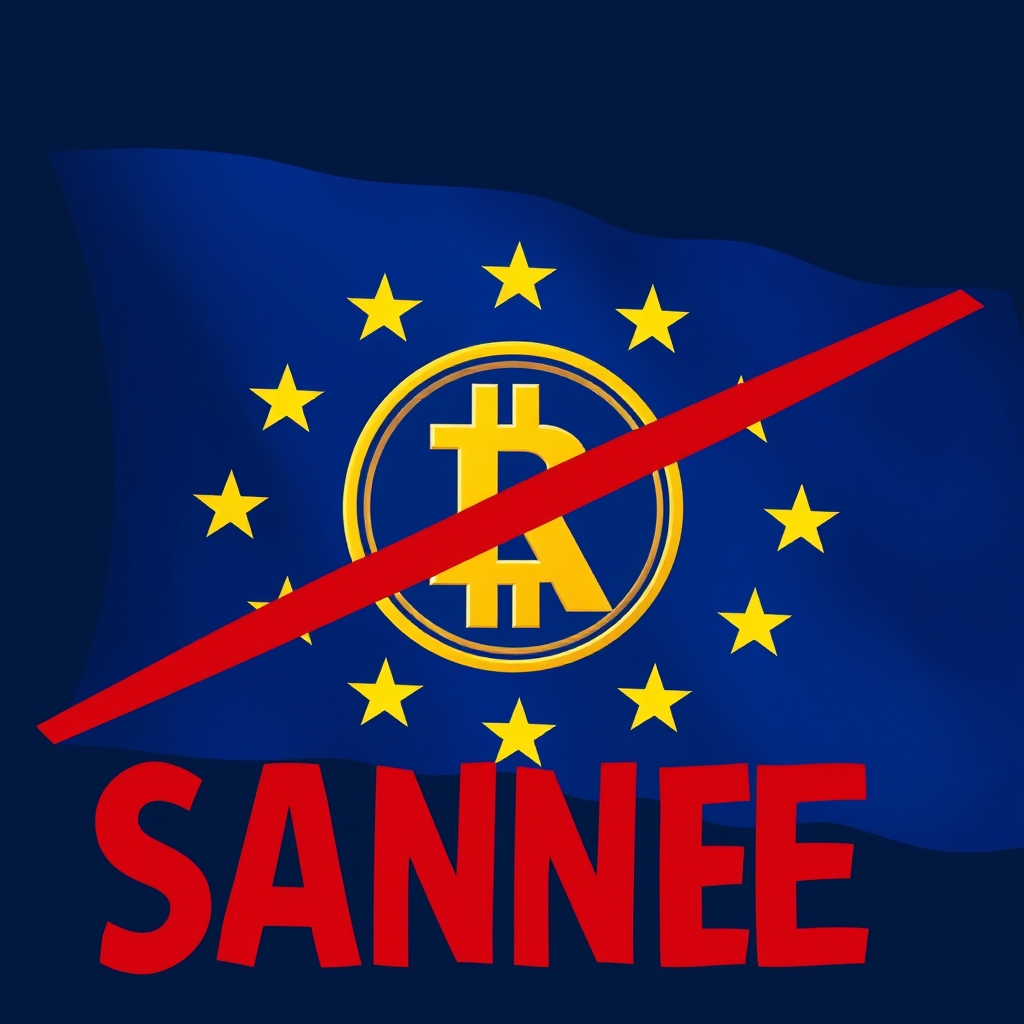
European Union sanctions package bans digital rubles and Russian crypto services
190
SHARES
1.5k
VIEWS
Share on FacebookShare on Twitter

The European Union has pulled crypto settlement squarely into geopolitics with its twentieth Russia sanctions package, banning digital rubles and penalizing anyone using sanctioned Russian crypto services. Adopted in late April, the measures show how quickly digital assets have become a front line in financial statecraft, and they are a reminder to traders that compliance risk now travels with the tokens and platforms they touch.

What Happened

The EU’s twentieth sanctions package, adopted April 23, added 120 new listings and rolled out financial measures aimed directly at crypto settlement. The rules target service providers, decentralized trading platforms, and ruble-backed tokens, effectively prohibiting digital rubles within the bloc and restricting Europeans from using Russian crypto services caught in the net. It is one of the most explicit efforts yet to fence off a state-aligned digital currency and the infrastructure around it.


Related articles

CFTC push for clearer rules on leveraged crypto trading in the US

CFTC Pushes Clearer Rules for Leveraged Crypto Trading

October 7, 2026
China peer-to-peer stablecoin wallet activity grew 43-fold despite crypto curbs

China’s P2P Stablecoin Wallets Grew 43x Despite a Crypto Ban

October 6, 2026

The package treats crypto rails the way earlier sanctions treated banks and payment networks — as channels that can be monitored, restricted, and cut off. By naming decentralized platforms alongside traditional service providers, the EU signaled that “decentralized” is not a shield from sanctions enforcement when identifiable operators or tokens are involved.

What It Means for Traders

For most traders, the direct exposure is small, but the precedent is significant. Sanctions that name specific tokens and platforms raise the compliance stakes for exchanges, wallet providers, and liquidity venues that operate in or serve European users. Platforms will move to screen and delist flagged assets, and that can ripple into liquidity and access for tokens perceived as adjacent to the restricted set.

The clearer takeaway is around stablecoins and state-backed tokens. A ruble-backed digital currency being explicitly banned underlines that not all fiat-pegged tokens carry the same risk profile. Traders should treat the regulatory standing of a stablecoin or settlement token as part of its risk, not an afterthought, especially when geopolitics is involved — a dynamic already visible in stress points like India’s USDT access premium.

The Bigger Picture

The move fits a widening trend of governments treating crypto as strategic infrastructure. As stablecoins scale into the hundreds of billions and cross-border settlement grows, the tokens that move value are increasingly subject to the same geopolitical pressures as the banking system. The EU’s willingness to name decentralized platforms marks an evolution in how regulators think about enforcement in a supposedly permissionless system.

It also sharpens the divide between compliant, transparent settlement rails and those operating in sanctioned or gray zones. For the broader market, that divide is becoming a feature of how value moves globally: capital gravitates toward assets and venues with clear regulatory footing, while sanctioned rails get pushed to the margins. The digital ruble ban is a concrete example of that sorting process playing out in real time.

Conclusion

The EU’s sanctions on digital rubles and Russian crypto services show that settlement is no longer politically neutral, and that decentralization offers limited cover when regulators decide to act. Traders do not need direct exposure to feel the effects — the lesson is to weigh the regulatory and geopolitical standing of the tokens and platforms they use as seriously as price and liquidity.

This article is informational only and does not constitute financial advice.

Tags: Crypto Settlement SanctionsDigital Ruble BanEU Crypto Sanctions
Share76Tweet48
Previous Post

SEC Gives Self-Custody Crypto Apps 5 Years to Get Licensed

Next Post

Aave Expands to Solana After a $290M DeFi Exploit

Michael Johnson

Michael Johnson

Michael is chief editor for Coinfractal.

Related Posts

CFTC push for clearer rules on leveraged crypto trading in the US

CFTC Pushes Clearer Rules for Leveraged Crypto Trading

by Michael Johnson
October 7, 2026
0

The CFTC wants leveraged crypto exchanges under clearer federal rules covering customer funds, surveillance, and market integrity. Here's what it...

China peer-to-peer stablecoin wallet activity grew 43-fold despite crypto curbs

China’s P2P Stablecoin Wallets Grew 43x Despite a Crypto Ban

by Michael Johnson
October 6, 2026
0

Chainalysis data show China's P2P stablecoin wallets grew 43x since 2024 despite a crypto ban, with $104.1 billion moved. What...

US banking regulation versus crypto trust bank charter illustration

OCC Trust Bank Charter Rule Faces Community Bank Lawsuit

by Michael Johnson
October 4, 2026
0

Community bankers sued the OCC to overturn its trust bank rule used by crypto firms. Here is what the lawsuit...

SEC building with a crypto custody vault concept

SEC Proposes New Crypto Custody Rules for Investment Funds

by Michael Johnson
October 3, 2026
0

The SEC has proposed rules that could reshape how investment funds custody crypto, with Chairman Paul Atkins pushing to replace...

New York and Wyoming coordinating crypto oversight over a US state map

New York and Wyoming Join Forces on Crypto Oversight

by Michael Johnson
October 2, 2026
0

New York and Wyoming signed a pact to coordinate crypto oversight, bridging the strictest and friendliest US regimes. Here is...

Load More
Next Post
Aave DeFi lending protocol expands onto Solana after a 290 million dollar exploit

Aave Expands to Solana After a $290M DeFi Exploit

  • Trending
  • Comments
  • Latest
Disabled Apes Community Project to Mint NFT Collection To Support The Disabled

Disabled Apes Community Project to Mint NFT Collection To Support The Disabled

May 15, 2022

Coinbase Users Can Now Gamify Their Experience Through League of Traders Integration

June 25, 2021

$COTI Token Looks Poised For Bullish Price Action,, Following Announcement of Upcoming COTI Pay, Physical Debit Cards

May 13, 2021
Coinsfera Opens Crypto OTC Trading Desk In Dubai

Coinsfera Opens Crypto OTC Trading Desk In Dubai

May 15, 2022

PayPal Users Can Now Check Out With Crypto

0

Global Financial Regulators Now Eyeing Defi, Altering Guidance Wording To Accommodate NFT’s

0

Mercury FX, & Ripple Launch Remittances Pilot In South Africa, Also Inducted Into IFWG Sandbox

0

FTSE Russell’s Portfolio Allocation Strategy For Institutional Investors, Targeted At Mitigation Volatility Risk

0
ECB warns of fragmentation without a digital euro

ECB Warns of Fragmentation Without a Digital Euro

October 7, 2026
Aave and Pendle fixed-term DeFi yield structure

How Aave and Pendle Keep DeFi Yield Capital In Place

October 7, 2026
Ethereum spot ETF outflows as ETH holds near 2700

Ethereum ETF Outflows Hit $206M as ETH Holds $2,700

October 7, 2026
Bitcoin mining hashrate concentrated in three countries

Bitcoin Mining Still 66% Concentrated in Three Countries

October 7, 2026
coinfractal logo

CoinFractal is cryptocurrency trading news, insights, and market forecast platform.

Categories

  • Altcoins
  • Apps
  • Bitcoin
  • Blockchain
  • Business
  • CBDC
  • ChainLink
  • Crypto
  • Defi
  • DogeCoin
  • EOS
  • Ethereum
  • Ethereum
  • Events
  • Government
  • Guides
  • Ideas
  • Insights
  • Litecoin
  • Litecoin
  • Markets
  • Metaverse
  • Metaverse
  • Mining
  • News
  • NFT
  • Press Release
  • Ripple
  • Solana
  • Stellar
  • Technical Analysis

Tags

$BTC $ETH $SOL Adoption Altcoin Altcoins Binance Bitcoin Blockchain CFTC CLARITY Act Crypto Cryptocurrency crypto regulation Crypto Security Defi Digital Assets Ethereum Exchanges Federal Reserve Fintech institutional crypto Institutions Investment Liquidity macro Market Analysis Markets Market Stories Market Structure NFT Prediction Markets Price Action Regulation Ripple RWA SEC Self-Custody Solana stablecoins staking tokenization Trading USDC XRP

Newsletter

The most important world news and events of the day

Be the first to know latest important news & events directly to your inbox.

By signing up, I agree to our TOS and Privacy Policy.

  • About us
  • FAQ
  • Contact Us
  • Cookie Policy
  • Privacy Policy
  • Terms and conditions
  • Disclaimer

© Copyright 2026, All Rights Reserved by CoinFractal. Made by Mobile & Web Development Company - Ingenium Web

No Result
View All Result
  • Home
  • Bitcoin
  • Crypto
    • Ethereum
    • Litecoin
    • Binance Coin
    • Ripple
    • Stellar
    • ChainLink
    • EOS
    • DogeCoin
  • Markets
  • Guides
  • Tools
    • Alerts
    • Charts
    • Convert
    • Apps
    • Exchange
    • Ideas
  • About us
    • Write for us
    • Advertise
    • Subscription
  • Contact Us

© Copyright 2026, All Rights Reserved by CoinFractal. Made by Mobile & Web Development Company - Ingenium Web

This website uses cookies. By continuing to use this website you are giving consent to cookies being used. Visit our Privacy Policy.