

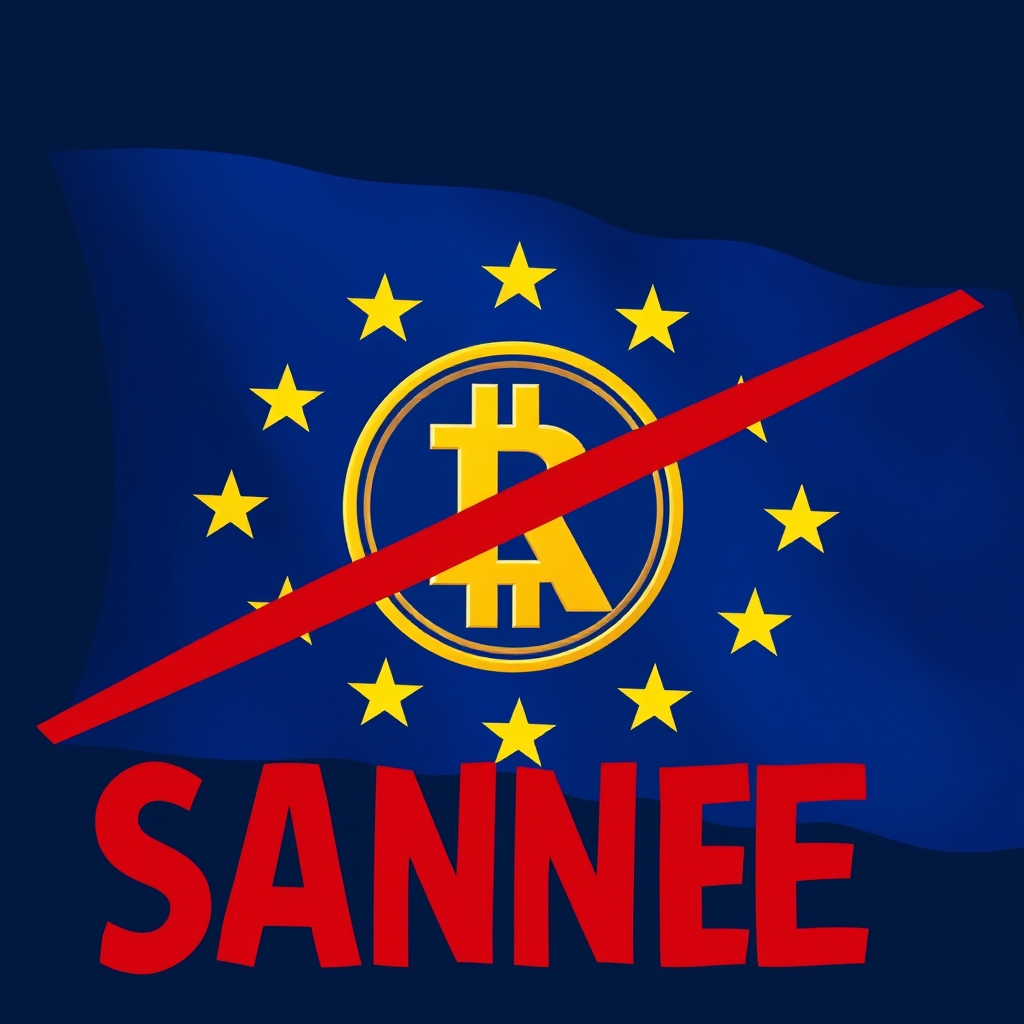
The European Union has pulled crypto settlement squarely into geopolitics with its twentieth Russia sanctions package, banning digital rubles and penalizing anyone using sanctioned Russian crypto services. Adopted in late April, the measures show how quickly digital assets have become a front line in financial statecraft, and they are a reminder to traders that compliance risk now travels with the tokens and platforms they touch.
What Happened
The EU’s twentieth sanctions package, adopted April 23, added 120 new listings and rolled out financial measures aimed directly at crypto settlement. The rules target service providers, decentralized trading platforms, and ruble-backed tokens, effectively prohibiting digital rubles within the bloc and restricting Europeans from using Russian crypto services caught in the net. It is one of the most explicit efforts yet to fence off a state-aligned digital currency and the infrastructure around it.


The package treats crypto rails the way earlier sanctions treated banks and payment networks — as channels that can be monitored, restricted, and cut off. By naming decentralized platforms alongside traditional service providers, the EU signaled that “decentralized” is not a shield from sanctions enforcement when identifiable operators or tokens are involved.
What It Means for Traders
For most traders, the direct exposure is small, but the precedent is significant. Sanctions that name specific tokens and platforms raise the compliance stakes for exchanges, wallet providers, and liquidity venues that operate in or serve European users. Platforms will move to screen and delist flagged assets, and that can ripple into liquidity and access for tokens perceived as adjacent to the restricted set.
The clearer takeaway is around stablecoins and state-backed tokens. A ruble-backed digital currency being explicitly banned underlines that not all fiat-pegged tokens carry the same risk profile. Traders should treat the regulatory standing of a stablecoin or settlement token as part of its risk, not an afterthought, especially when geopolitics is involved — a dynamic already visible in stress points like India’s USDT access premium.
The Bigger Picture
The move fits a widening trend of governments treating crypto as strategic infrastructure. As stablecoins scale into the hundreds of billions and cross-border settlement grows, the tokens that move value are increasingly subject to the same geopolitical pressures as the banking system. The EU’s willingness to name decentralized platforms marks an evolution in how regulators think about enforcement in a supposedly permissionless system.
It also sharpens the divide between compliant, transparent settlement rails and those operating in sanctioned or gray zones. For the broader market, that divide is becoming a feature of how value moves globally: capital gravitates toward assets and venues with clear regulatory footing, while sanctioned rails get pushed to the margins. The digital ruble ban is a concrete example of that sorting process playing out in real time.
Conclusion
The EU’s sanctions on digital rubles and Russian crypto services show that settlement is no longer politically neutral, and that decentralization offers limited cover when regulators decide to act. Traders do not need direct exposure to feel the effects — the lesson is to weigh the regulatory and geopolitical standing of the tokens and platforms they use as seriously as price and liquidity.
This article is informational only and does not constitute financial advice.