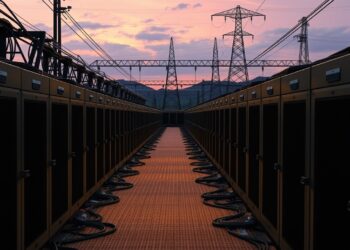
Russia’s crypto mining ban just widened to cover its most important region. The government has added Moscow, the surrounding Moscow Region, and parts of the Kursk Region to a list of areas where mining is prohibited, extending the restriction through 2032 and citing strain on the power grid. For traders watching global hashrate distribution, the move is another data point in an ongoing reshuffle of where Bitcoin gets produced.
What Happened
Russian authorities expanded the geographic scope of an existing mining ban, folding in the capital and neighboring territories. The stated rationale is power supply: officials argue that energy-intensive mining competes with residential and industrial demand, particularly during peak seasonal load.


The ban runs through 2032, signaling that this is a structural policy rather than a temporary emergency measure. Russia has been a meaningful contributor to global Bitcoin mining, so removing its densest population and infrastructure hub from the legal map carries weight beyond the headline.
What It Means for Traders
Regional bans rarely dent Bitcoin’s total hashrate for long. The network adjusts through its difficulty mechanism, which recalibrates roughly every two weeks to keep block times steady. When miners go offline in one jurisdiction, difficulty eases and the remaining miners earn a larger share until displaced capacity relocates or new machines come online.
That self-correcting behavior is visible in events like the historic mining difficulty drop tied to collapsing margins. For traders, the signal to watch is not a short-term price reaction but the medium-term shift in where hashrate concentrates. A more geographically fragmented mining base can improve network resilience, while heavy concentration in fewer jurisdictions raises regulatory single-point risk.
The Bigger Picture
Power availability has become the defining constraint on mining, and it is increasingly pitting Bitcoin against other demands on the grid. That same competition is reshaping miner economics elsewhere, pushing operators to pivot toward AI infrastructure where energy-hungry compute can earn a higher return than block rewards alone.
Russia’s decision fits a global pattern in which governments treat mining as a discretionary load to be curtailed when the grid tightens. Combined with margin pressure that has already driven one of the largest difficulty declines of 2026, the direction of travel is clear: mining is migrating toward regions with cheap, surplus, and politically stable energy.
Conclusion
The expanded ban is unlikely to threaten Bitcoin’s security, but it accelerates the map redraw already underway. Energy policy, not token price, is now the primary lever shaping where hashrate lives, and traders tracking the network’s health should treat grid politics as a core part of the mining story rather than a footnote.
This article is informational only and does not constitute financial advice.