
CoinFractal
Advertisement
  • Home
  • Bitcoin
  • Crypto
    • Ethereum
    • Litecoin
    • Binance Coin
    • Ripple
    • Stellar
    • ChainLink
    • EOS
    • DogeCoin
  • Markets
  • Guides
  • Tools
    • Alerts
    • Charts
    • Convert
    • Apps
    • Exchange
    • Ideas
  • About us
    • Write for us
    • Advertise
    • Subscription
  • Contact Us
No Result
View All Result
  • Home
  • Bitcoin
  • Crypto
    • Ethereum
    • Litecoin
    • Binance Coin
    • Ripple
    • Stellar
    • ChainLink
    • EOS
    • DogeCoin
  • Markets
  • Guides
  • Tools
    • Alerts
    • Charts
    • Convert
    • Apps
    • Exchange
    • Ideas
  • About us
    • Write for us
    • Advertise
    • Subscription
  • Contact Us
No Result
View All Result
CoinFractal
No Result
View All Result
Home Crypto

4,200 Malicious Smart Contracts Drained 5,700 Crypto Wallets

Michael Johnson by Michael Johnson
August 4, 2026
in Crypto, Defi
Reading Time: 3 mins read
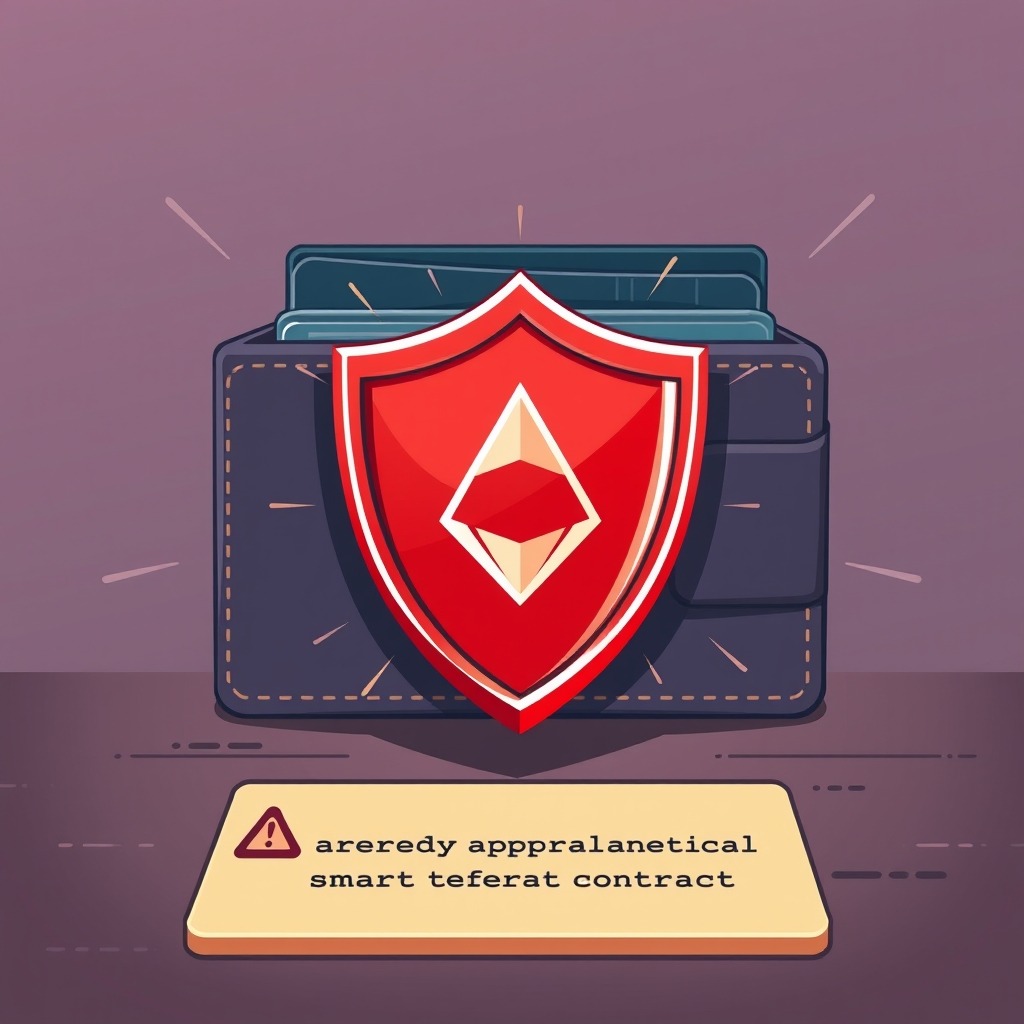
Illustration of a red alert shield over an ethereum wallet warning of approval phishing
189
SHARES
1.5k
VIEWS
Share on FacebookShare on Twitter

A new study says 4,224 malicious smart contracts were linked to 5,742 victim addresses that unknowingly signed away access to their own crypto. The findings put a hard number on approval phishing, the quiet attack style that drains wallets not by breaking cryptography but by tricking users into authorizing it. For any trader who clicks “approve” without reading, these malicious smart contracts are a direct and personal risk.

What Happened

Researchers mapped 4,224 malicious contracts to 5,742 distinct victim wallets, tracing how attackers convinced users to grant token approvals or signatures that handed over spending rights. Once a victim signs, the contract can move approved tokens out at the attacker’s convenience—often long after the interaction, which is why many victims do not notice until the balance is gone.


Related articles

Illustration of tokenized money market funds backing stablecoin reserves

BlackRock Launches Tokenized Money Market Funds for Stablecoins

August 4, 2026
Solana automated trading bot network with neon data streams representing routing and market maker activity

Solana Bots’ 3x Edge Puts Order Routing Under the Spotlight

August 3, 2026

The study is worth treating with appropriate caution. It has not been peer-reviewed, and some of its own figures—such as an Avalanche-related count and the data-collection cutoff—appear to conflict. The headline pattern, however, is consistent with what wallet providers and security teams have warned about for years across MetaMask, Trust Wallet, Coinbase Wallet, and BNB Chain users.

What It Means for Traders

Approval phishing sidesteps every strong security assumption in crypto. Your keys can be safe, your seed phrase never exposed, and your funds still leave because you authorized a malicious contract to spend them. Active traders are especially exposed, since interacting with many new dApps, mints, and airdrops multiplies the number of approvals a wallet accumulates over time.

The practical defenses are unglamorous but effective: review exactly what a transaction is asking you to approve, avoid unlimited spending allowances, revoke stale approvals periodically, and keep high-value holdings on a hardware wallet or a separate address you never use for random dApp interactions. Treat any unexpected prompt to “approve” or “sign” during a hyped launch as a reason to slow down, not speed up.

The Bigger Picture

Wallet-draining scams are now a structural cost of an open, permissionless system, and they compound the damage from headline exploits. This year has already been brutal on the security front, with crypto hacks draining $1.1B across 212 incidents in H1 2026 and Q2 ranking as one of the worst quarters ever for hacks. Approval phishing is the retail-facing edge of that same problem.

Sophisticated theft still grabs the attention—see the forensic detail behind North Korea’s $285M Drift Protocol hack—but the aggregate toll from thousands of small, contract-based drains is easy to underestimate. Better wallet warnings and simulation tools help, yet the last line of defense remains the person clicking approve.

Conclusion

Even with its methodological caveats, the study is a useful reminder that most wallet losses are authorized, not hacked. The number to internalize is not 4,224 or 5,742 but the habit behind them: signing without reading. Traders who audit their approvals, cap allowances, and isolate their main funds remove the single most common way these contracts succeed.

This article is informational only and does not constitute financial advice.
Share76Tweet47
Previous Post

Treasury’s Top Crypto Adviser Exits as Market Rules Stall

Next Post

Bitmine Adds 10,399 ETH, Treasury Nears 5.8 Million Ether

Michael Johnson

Michael Johnson

Michael is chief editor for Coinfractal.

Related Posts

Illustration of tokenized money market funds backing stablecoin reserves

BlackRock Launches Tokenized Money Market Funds for Stablecoins

by Michael Johnson
August 4, 2026
0

BlackRock has launched two tokenized money market funds built to serve as reserve assets for regulated stablecoins under the US...

Solana automated trading bot network with neon data streams representing routing and market maker activity

Solana Bots’ 3x Edge Puts Order Routing Under the Spotlight

by Michael Johnson
August 3, 2026
0

A tiny cluster of Solana trading bots won three times as often, and routing was the common thread. What the...

Digital stablecoin dollar tokens flowing through a global payment network representing PayPal PYUSD

PayPal Bets Big on Stablecoins After Record Q2 Volume

by Michael Johnson
August 3, 2026
0

PayPal is betting big on stablecoins after a record Q2, folding PYUSD into a dedicated crypto division. What the payments...

Abstract DeFi blockchain network with frozen nodes representing halted transactions

Moonbeam Halts All Transactions, Stranding Late GLMR Holders

by Michael Johnson
August 2, 2026
0

Moonbeam halted all user transactions, leaving some late GLMR holders reliant on a helpdesk to recover funds. Here is what...

Illustration of a cybersecurity breach with stolen cryptocurrency flowing across a dark network

Crypto Hacks Drained $1.1B in H1 2026 Across 212 Incidents

by Michael Johnson
August 2, 2026
0

Crypto lost roughly $1.1 billion to hacks in the first half of 2026 across 212 incidents, with North Korea-linked groups...

Load More
Next Post
Illustration of a corporate Ethereum treasury vault with stacked ETH coins

Bitmine Adds 10,399 ETH, Treasury Nears 5.8 Million Ether

  • Trending
  • Comments
  • Latest
Disabled Apes Community Project to Mint NFT Collection To Support The Disabled

Disabled Apes Community Project to Mint NFT Collection To Support The Disabled

May 15, 2022

$COTI Token Looks Poised For Bullish Price Action,, Following Announcement of Upcoming COTI Pay, Physical Debit Cards

May 13, 2021

Coinbase Users Can Now Gamify Their Experience Through League of Traders Integration

June 25, 2021
Coinsfera Opens Crypto OTC Trading Desk In Dubai

Coinsfera Opens Crypto OTC Trading Desk In Dubai

May 15, 2022

PayPal Users Can Now Check Out With Crypto

0

Global Financial Regulators Now Eyeing Defi, Altering Guidance Wording To Accommodate NFT’s

0

Mercury FX, & Ripple Launch Remittances Pilot In South Africa, Also Inducted Into IFWG Sandbox

0

FTSE Russell’s Portfolio Allocation Strategy For Institutional Investors, Targeted At Mitigation Volatility Risk

0
Illustration of a corporate Ethereum treasury vault with stacked ETH coins

Bitmine Adds 10,399 ETH, Treasury Nears 5.8 Million Ether

August 4, 2026
Illustration of a red alert shield over an ethereum wallet warning of approval phishing

4,200 Malicious Smart Contracts Drained 5,700 Crypto Wallets

August 4, 2026
Illustration of US Treasury building with digital asset policy theme

Treasury’s Top Crypto Adviser Exits as Market Rules Stall

August 4, 2026
Illustration of Solana parallel transaction lanes with one congested hot lane

Solana Lifts Block Capacity 66%, but the State Bottleneck Holds

August 4, 2026
coinfractal logo

CoinFractal is cryptocurrency trading news, insights, and market forecast platform.

Categories

  • Altcoins
  • Apps
  • Bitcoin
  • Blockchain
  • Business
  • CBDC
  • ChainLink
  • Crypto
  • Defi
  • DogeCoin
  • EOS
  • Ethereum
  • Ethereum
  • Events
  • Government
  • Guides
  • Ideas
  • Insights
  • Litecoin
  • Litecoin
  • Markets
  • Metaverse
  • Metaverse
  • Mining
  • News
  • NFT
  • Press Release
  • Ripple
  • Solana
  • Stellar
  • Technical Analysis

Tags

$BTC $ETH Adoption Altcoin Altcoins Binance Bitcoin Blockchain Bullish Action CFTC China Crypto Cryptocurrency crypto regulation Crypto Security Crypto Users Defi Digital Assets Ethereum Exchange Listing Exchanges Fintech Huobi institutional crypto Institutions Investment Liquidity macro Market Analysis Markets Market Stories Market Structure NFT Prediction Markets Price Action Regulation Research Self-Custody Solana stablecoins tokenization Trading USDC Volatility XRP

Newsletter

The most important world news and events of the day

Be the first to know latest important news & events directly to your inbox.

By signing up, I agree to our TOS and Privacy Policy.

  • About us
  • FAQ
  • Contact Us
  • Cookie Policy
  • Privacy Policy
  • Terms and conditions
  • Disclaimer

© Copyright 2026, All Rights Reserved by CoinFractal. Made by Mobile & Web Development Company - Ingenium Web

No Result
View All Result
  • Home
  • Bitcoin
  • Crypto
    • Ethereum
    • Litecoin
    • Binance Coin
    • Ripple
    • Stellar
    • ChainLink
    • EOS
    • DogeCoin
  • Markets
  • Guides
  • Tools
    • Alerts
    • Charts
    • Convert
    • Apps
    • Exchange
    • Ideas
  • About us
    • Write for us
    • Advertise
    • Subscription
  • Contact Us

© Copyright 2026, All Rights Reserved by CoinFractal. Made by Mobile & Web Development Company - Ingenium Web

This website uses cookies. By continuing to use this website you are giving consent to cookies being used. Visit our Privacy Policy.