

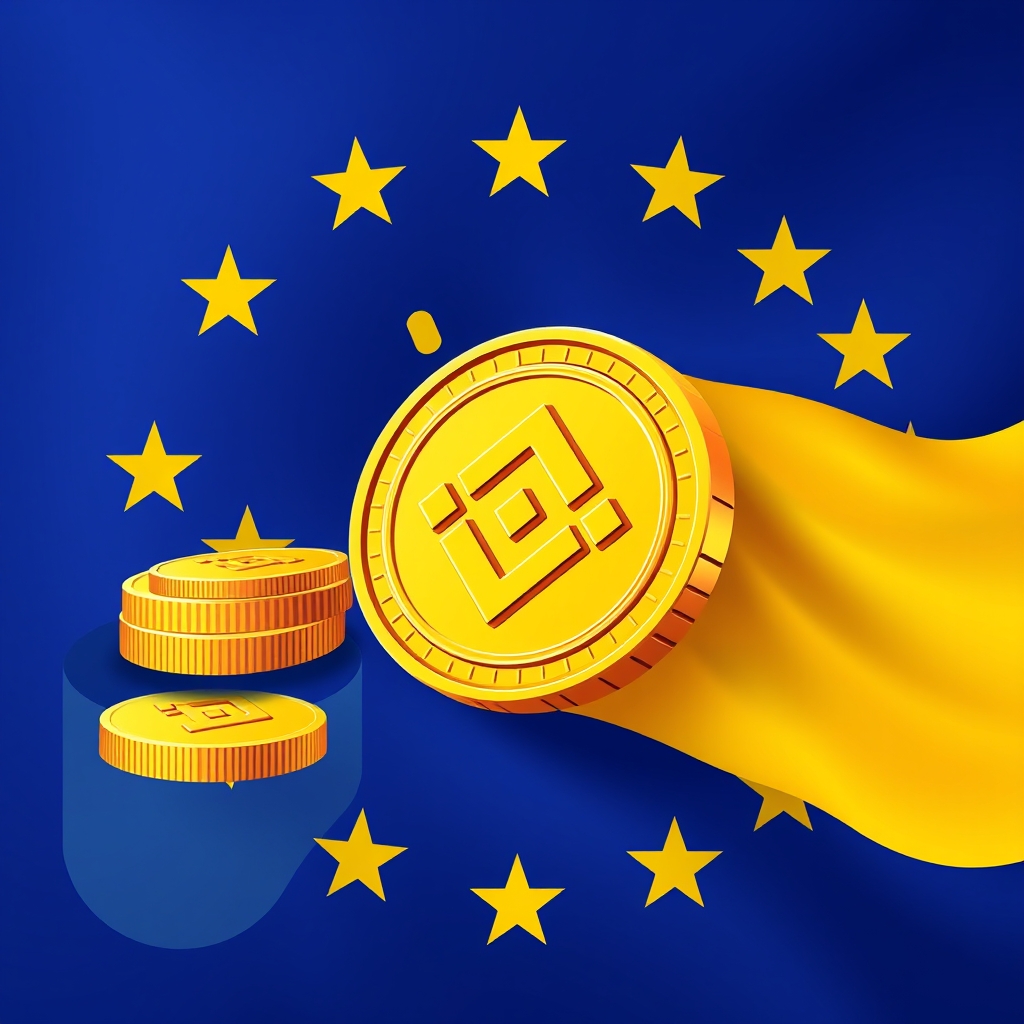
Binance’s MiCA licensing push has pulled back the curtain on an uncomfortable question at the heart of the EU’s crypto rulebook: who actually holds the power to approve a crypto-asset service provider? Under the Markets in Crypto-Assets framework, that authority formally belongs to individual national regulators, but Binance’s licensing process has revealed how much informal weight the European Central Bank can carry behind the scenes. For traders operating across EU venues, the outcome could reshape how quickly, and where, major exchanges secure the passportable licenses that determine market access.
What Happened
Under MiCA, a single license granted by one EU member state’s regulator lets a crypto-asset service provider operate across the entire bloc through passporting rights. Binance has been working through this process with national authorities, including regulators in Greece, as it seeks the kind of CASP authorization that would let it operate legally across the EU without needing separate approvals in each country.


Legal experts tracking the process have pointed out that MiCA’s text does not explicitly prohibit the ECB from communicating with national regulators while a licensing application is under review. That distinction matters: the ECB has no formal vote or veto in CASP authorization decisions, but nothing in the framework stops it from weighing in informally, raising concerns, or shaping how a national regulator interprets its obligations.
The tension has become more visible as Binance’s application has moved through the pipeline, with observers questioning whether a supranational monetary authority is exerting influence over a licensing structure that MiCA deliberately designed to sit with individual member states.
What It Means for Traders
For traders, the practical stakes come down to timing and venue access. MiCA’s passporting mechanism only works once a license is actually granted, and any delay or added scrutiny tied to informal ECB input could slow down when and where a major exchange like Binance can operate under full EU authorization.
That matters because licensed CASPs are increasingly the gatekeepers of institutional liquidity, banking relationships, and payment rails in the EU. An exchange without a finalized MiCA license faces more friction connecting to euro-denominated banking partners and may see fewer fiat on-ramp options in specific jurisdictions.
Traders should also watch which member state ultimately becomes the license of record. Regulatory approach varies meaningfully between authorities, and the country that approves Binance’s CASP status could set a precedent other exchanges lean on when choosing where to seek their own EU licensing.
The Bigger Picture
The Binance case is really a stress test for MiCA’s federated design. The regulation was built to let member states retain authority over licensing decisions while still creating one unified rulebook and one passport. That structure only holds together if member states genuinely control the outcome, rather than deferring in practice to guidance from Frankfurt.
If the ECB’s informal involvement becomes a pattern rather than an exception, it raises longer-term questions about whether MiCA’s national-authority model functions as intended or whether de facto authority is quietly consolidating at the EU level. That has implications well beyond Binance, since every exchange, custodian, and stablecoin issuer seeking a CASP license in the coming years will be navigating the same layered relationship between national regulators and EU-level institutions.
For now, the formal decision-making power stays with national regulators. But the scrutiny on how that power is actually exercised is only going to intensify as more large exchanges move through the MiCA licensing pipeline.
How this specific case resolves could become a reference point for how CASP authorizations are handled across the EU going forward, particularly for exchanges operating at Binance’s scale.
This article is informational only and does not constitute financial advice.