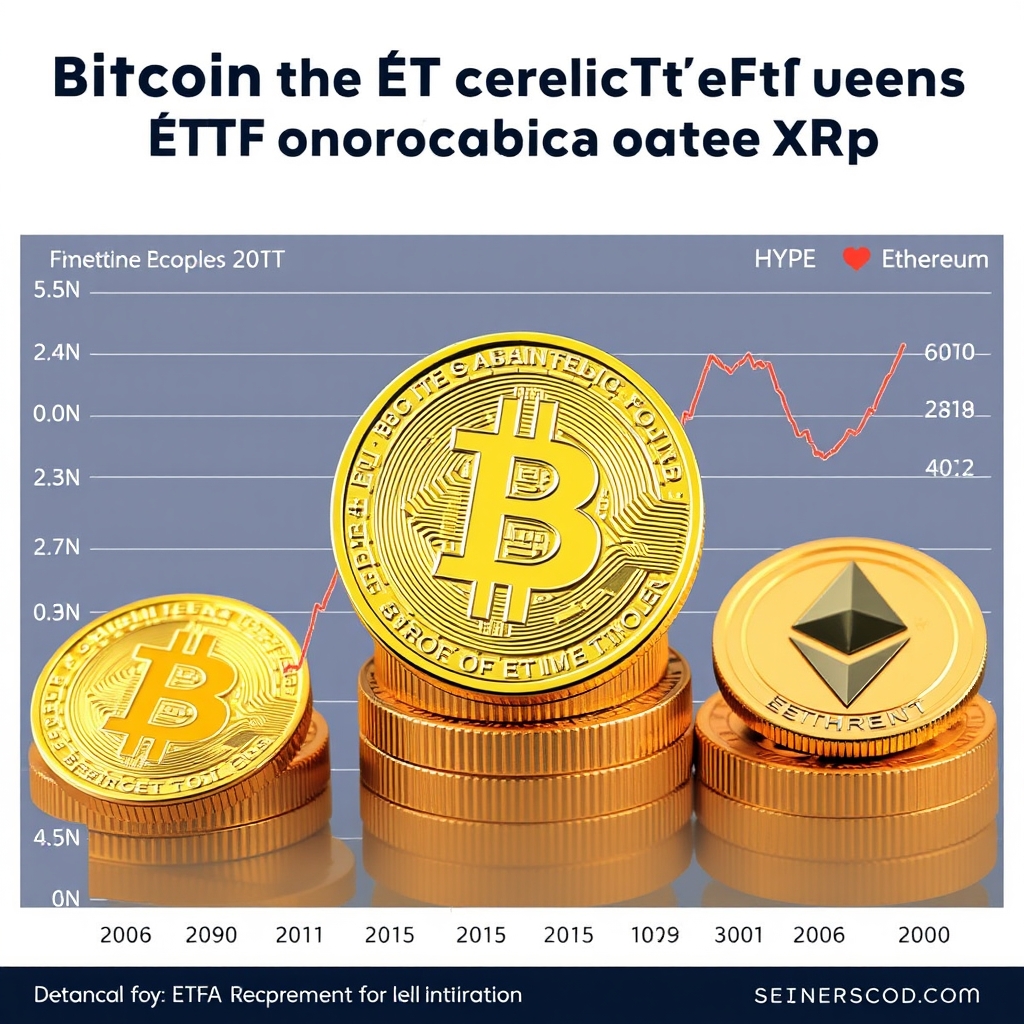
Bitcoin and Ethereum ETF outflows piled up again last week, with redemptions from the two largest spot products dwarfing every other flow in the market. At the same time, XRP and HYPE-linked wrapper products managed to pull in fresh institutional cash, a split that rarely shows up this cleanly. For traders, the gap between broad crypto ETF selling and targeted altcoin buying says more about where conviction actually sits than any single headline number does.
What Happened
Spot Bitcoin and Ethereum ETFs booked meaningful net outflows over the week, with redemptions concentrated in the largest issuers. The size of the withdrawal from both products was large enough to outweigh every other flow category tracked across the crypto ETF landscape combined.

XRP’s wrapper products still logged a net weekly inflow, though a modest one relative to the scale of the BTC and ETH redemptions. HYPE-linked products, tied to exposure on the Hyperliquid ecosystem, also drew in fresh institutional buying over the same stretch. Neither altcoin flow came close to offsetting the large-cap outflows in dollar terms, but the direction mattered more than the size.
The result is a split flow picture: institutions were net sellers of broad crypto beta through Bitcoin and Ethereum wrappers, while staying net buyers of two more concentrated, narrative-driven altcoin plays.
What It Means for Traders
Bitcoin and Ethereum ETF flows function as a rough proxy for how institutional desks feel about crypto as a macro asset class. Sustained outflows there typically point to broad risk-trimming rather than a view on any single coin’s fundamentals, and traders who watch these products for sentiment should treat last week’s redemptions as a beta signal, not a bearish call on Bitcoin or Ethereum specifically.
The XRP and HYPE inflows are a different kind of signal entirely. When institutions keep buying a specific altcoin wrapper while dumping broad exposure, it usually reflects a targeted thesis, a catalyst, or a hedge fund mandate rather than renewed bullishness on crypto overall. Traders should be cautious about reading these inflows as confirmation that altcoins are about to outperform the majors across the board.
Correlation-aware traders can use this divergence as a reminder that flow data works best coin by coin, not as a single aggregated “crypto ETF” number. Position sizing and hedges built around an assumption that all crypto ETF products move together are more likely to misfire during weeks like this one, when the large caps and the altcoin niche products are pulling in opposite directions.
The Bigger Picture
This divergence fits a broader pattern that has been building since more altcoin-specific ETF-style products became available: institutions increasingly treat crypto exposure the way they treat any other asset class, separating beta from idiosyncratic bets. Bitcoin and Ethereum ETFs serve as the default vehicle for broad market exposure, while newer, narrower products let desks express a specific view on a single token or ecosystem without taking on exposure to the entire sector.
That kind of segmentation is a sign of a maturing market structure rather than a red flag on its own. As more single-asset and thematic wrapper products launch, expect flow data to fragment further, making broad “crypto ETF flows” headlines less useful and coin-specific flow tracking more important for anyone trying to read institutional positioning.
The regulatory and product backdrop also matters here. The fact that XRP and HYPE-linked wrappers exist and can absorb institutional demand at all reflects how much the product landscape has expanded beyond the original Bitcoin and Ethereum spot approvals, giving desks more precise tools to express conviction than they had even a year ago.
Going forward, traders should track ETF flows as two separate stories rather than one. Large-cap flows tell you about macro risk appetite toward crypto broadly, while altcoin wrapper flows tell you where concentrated institutional conviction is forming. Confusing the two, or assuming they always move in the same direction, is the more likely source of a misread than either data set on its own.
This article is informational only and does not constitute financial advice.