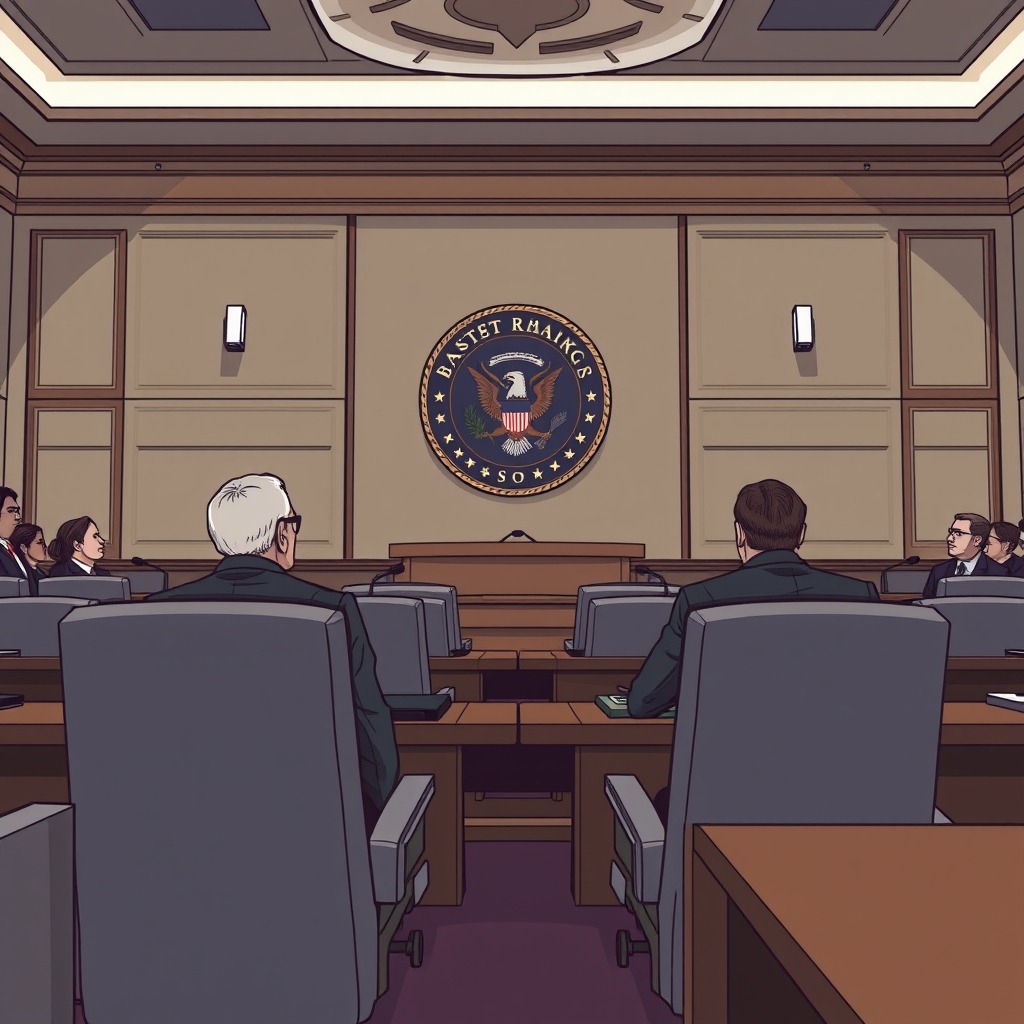
Crypto regulation in the United States is about to run on a skeleton crew. Seven commissioner seats across the Securities and Exchange Commission and the Commodity Futures Trading Commission will sit empty after this week, leaving only a handful of officials to steer policy for a roughly $3 trillion digital asset market. For traders, thinner leadership at both agencies points to slower rulemaking, more open questions, and a heavier reliance on staff-level guidance than on binding rules.
What Happened
A key resignation has pushed both agencies toward minimal working quorums, with the SEC and CFTC together entering a stretch where as few as three commissioners may be in place to sign off on major decisions. Independent agencies like these are built to operate with a full slate of commissioners who vote on rules, enforcement priorities, and formal relief. When seats go unfilled, the remaining members carry outsized weight, and a single absence can stall a vote or delay a decision markets have been waiting on.


The timing matters because both agencies had been leaning into crypto policy rather than away from it. The CFTC and SEC have spent recent months trying to define their lanes over digital assets without a finished market-structure law from Congress, a dynamic we covered in how the CFTC joined the SEC in shaping crypto rules without a CLARITY bill. A reduced commission does not erase that work, but it narrows how much of it can advance quickly.
What It Means for Traders
The most immediate effect is tempo. Fewer commissioners means fewer open meetings, fewer final rules, and more reliance on staff guidance that can be adjusted or withdrawn without a formal vote. Guidance is useful, but it is a weaker foundation than a settled rule, and markets tend to price that weaker footing as regulatory risk.
Product timelines are the clearest pressure point. Decisions on new exchange-traded products, token classification, and custody frameworks all benefit from a functioning quorum. Traders watching for clearer listing paths, like the questions raised in the SEC’s $75M crypto path versus what Congress is offering, should expect those threads to move more slowly while seats stay empty. Enforcement can also become lumpier, with the agencies more likely to prioritize a smaller number of high-signal cases than a broad sweep.
The Bigger Picture
Staffing is quietly one of the most underrated variables in crypto policy. Markets tend to focus on the content of rules, but the capacity to write, vote on, and defend those rules is just as important. A thinly staffed SEC and CFTC can still act, yet the bar for coordinated, ambitious policy rises when every vote is scarce.
There is a two-sided read here. A lighter commission can slow aggressive enforcement that the industry has often criticized, which some market participants may welcome. At the same time, it delays the durable clarity that institutions say they need before committing capital, an issue that has shadowed everything from token fundraising to listings, as seen when the SEC canceled a crypto fundraising meeting. Vacancies get filled eventually, but confirmation cycles are slow, and the interim can stretch for months.
Conclusion
For now, the practical takeaway is patience. A leaner SEC and CFTC likely means a slower policy calendar, more emphasis on staff guidance, and fewer landmark decisions in the near term. Traders positioning around regulatory catalysts should widen their timelines and watch commissioner appointments as closely as any single rule, because the pace of oversight now depends as much on who is in the room as on what they decide.
This article is informational only and does not constitute financial advice.