


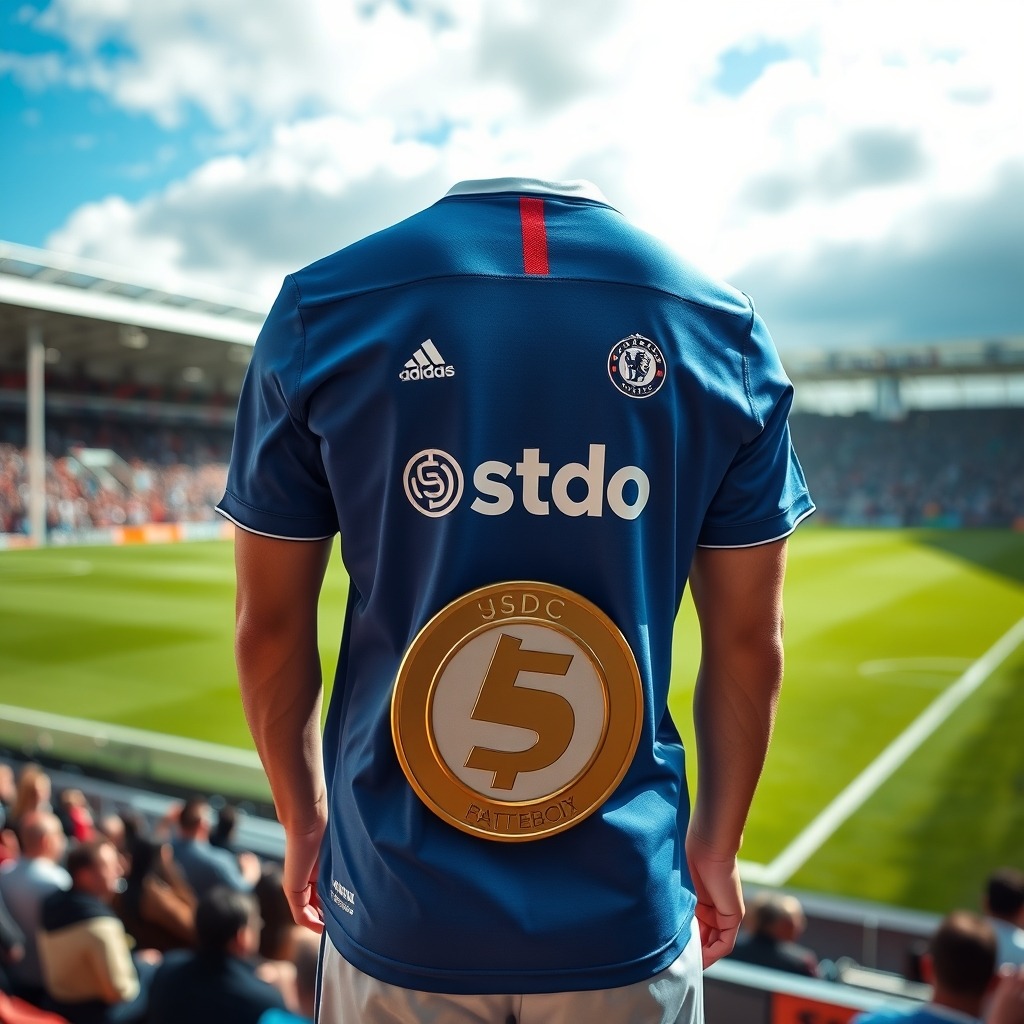
Circle is putting USDC on the front of Chelsea’s shirts, becoming the Premier League club’s principal partner for the 2026/27 season across the men’s, women’s and academy teams. The deal drags a dollar-pegged stablecoin out of trading dashboards and into one of the most-watched sports leagues on the planet. For traders, the signal is less about football and more about distribution: the stablecoin fight is shifting from who has the best yield or integrations to who owns mainstream trust and everyday visibility.
What Happened
Circle, the issuer behind USDC, has agreed to become Chelsea’s front-of-shirt and principal partner starting with the 2026/27 campaign. USDC branding will appear on the men’s, women’s and academy kits, giving the stablecoin a permanent presence on matchday broadcasts, highlight reels and merchandise seen across dozens of markets.


Front-of-shirt slots at top Premier League clubs are among the most valuable real estate in global sports marketing, and they have historically gone to airlines, banks and consumer-tech giants. Handing that space to a stablecoin issuer is a statement of intent. It positions USDC not as a niche crypto instrument but as a brand meant to sit comfortably beside traditional financial and consumer names.
What It Means for Traders
Stablecoins are the plumbing of crypto trading. They are the base pair for most spot and derivatives activity, the parking spot between trades, and increasingly the settlement layer for on-chain finance. Which stablecoin traders trust and hold has real consequences for liquidity, counterparty risk and how easily capital moves between venues. A high-profile trust-building campaign is part of how an issuer defends and grows that base.
The competitive backdrop matters here. Circle has been widening USDC’s reach through infrastructure and distribution deals, from renegotiating how USDC revenue is shared with major exchange partners to backing new settlement rails alongside traditional finance heavyweights. A shirt sponsorship extends that push into the consumer mindshare layer, where the goal is to make USDC a name non-traders recognize. For active market participants, deeper mainstream adoption tends to translate into steadier stablecoin liquidity, which is the environment most trading strategies quietly depend on.
The flip side is concentration. As one or two stablecoins capture more brand power and more of the market’s default liquidity, traders should stay aware of how much of their activity funnels through a single issuer. Diversification of settlement assets is a risk-management question that a glossy sponsorship does not answer.
The Bigger Picture
The Chelsea deal lands in a period when stablecoin regulation has become clearer rather than more hostile, giving issuers the confidence to spend on mainstream branding. As landmark stablecoin legislation matures, the compliance path for regulated dollar tokens has widened, and that legal cover is precisely what lets a stablecoin brand sit on a Premier League shirt without controversy.
Zoom out and the move reads as part of a longer convergence between crypto payments and traditional consumer finance. Stablecoins are being pitched as payment tools, not just trading chips, and sports sponsorship is a classic playbook for payment brands trying to become habitual. Whether that translates into real-world USDC usage or stays a branding exercise is the open question, but the direction is unmistakable.
The Bottom Line
Circle’s Chelsea deal is a bet that the next phase of the stablecoin race is won on trust and visibility, not just technology. For traders, the practical read-through is a stablecoin ecosystem that is maturing into mainstream finance, with the liquidity benefits and concentration risks that come with it. The scoreline that matters here is measured in adoption, not goals.
This article is informational only and does not constitute financial advice.