Cardano founder Charles Hoskinson has laid out a detailed 2026 strategic funding roadmap that reworks how the network’s treasury bankrolls development, and for ADA holders the plan matters because it ties the token’s long-term relevance to whether Cardano can finally convert its research reputation into shipped applications. In a smart contract market where liquidity and developers chase the fastest-growing chains, how a protocol spends its own money has become a competitive signal traders cannot ignore.
What Happened
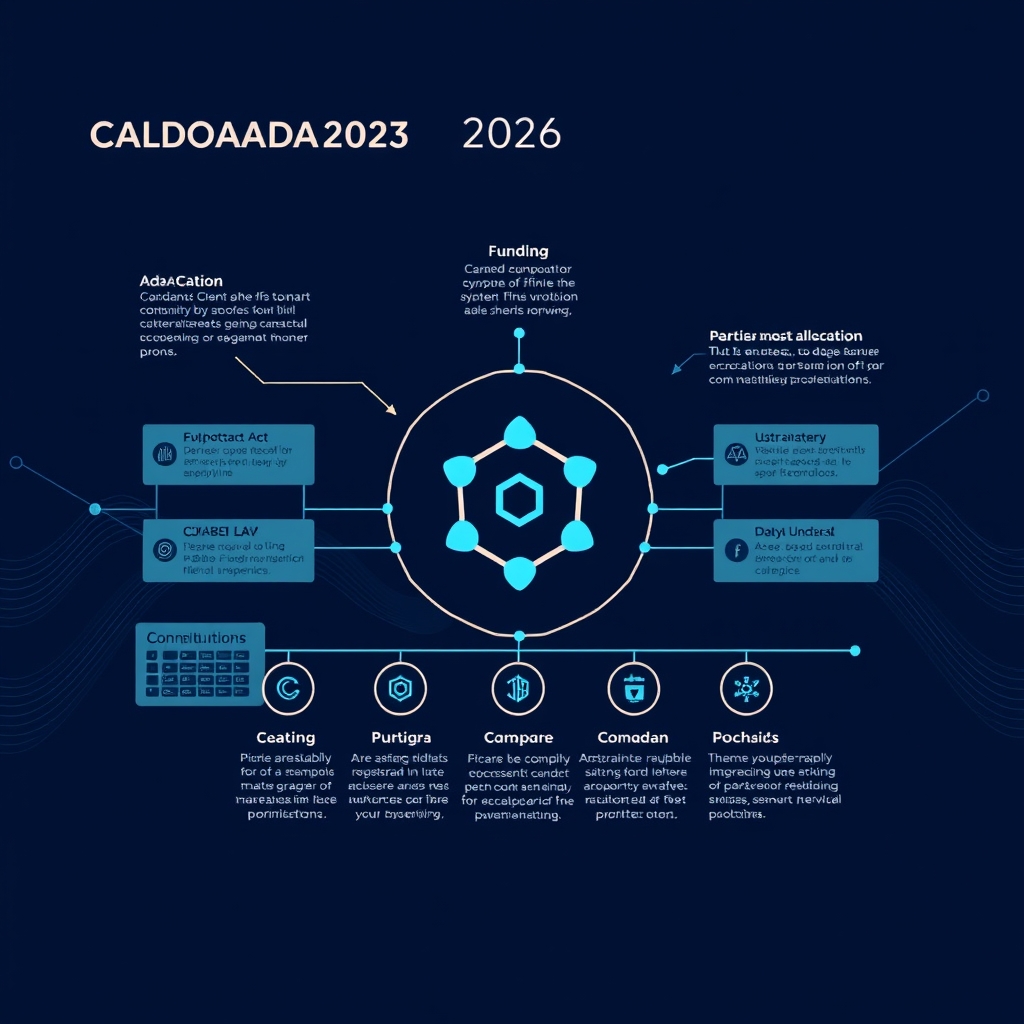
Hoskinson outlined a roadmap centered on new treasury allocation mechanisms and clearer development priorities for 2026. The plan restructures how funds flow from Cardano’s on-chain treasury toward developer grants, ecosystem incentives, and dApp adoption, with the stated goal of accelerating the pace at which projects launch and stay on the network.


Rather than a single large fund, the approach leans on structured allocation designed to make spending more accountable and outcome-driven. The emphasis is on funding builders directly and rewarding the applications that attract real users, a shift from broad ecosystem subsidies toward targeted, milestone-based support.
What It Means for Traders
For traders, treasury policy is fundamentals, not trivia. A chain’s ability to fund development without diluting holders or leaning on token sales speaks to how sustainable its ecosystem is across a full market cycle. Cardano’s treasury is funded by a portion of transaction fees and reserves, so a roadmap that spends it more efficiently can strengthen the long-term case for ADA without forcing new supply onto the market.
The near-term catalyst is adoption. If the new grant structure produces visible dApp launches and rising on-chain activity, that gives ADA a narrative to trade on beyond broad market beta. If the spending produces announcements without usage, the market will likely discount it quickly. Watch developer activity, total value locked, and active addresses as the tells that separate roadmap talk from roadmap results, especially as institutional flows keep rotating between altcoins.
The Bigger Picture
Cardano is competing in a crowded smart contract field where Ethereum, Solana, and a wave of Layer-2 networks are fighting for the same developers and liquidity. The chains winning that fight have generally paired funding with momentum, turning capital into applications and applications into users. Cardano’s research-first culture has long produced credibility but drawn criticism for slow shipping, and a funding roadmap built around accountable grants is an attempt to close that gap.
It also fits a broader 2026 theme: treasuries and capital discipline are becoming central to how the market values crypto networks. From corporate Bitcoin strategies to protocol-level treasury design, allocators are paying closer attention to how digital assets are financed and spent. Cardano putting its treasury strategy front and center is part of that shift toward treating tokenomics as a serious, ongoing management question.
Conclusion
Hoskinson’s 2026 roadmap gives Cardano a clearer plan for turning treasury capital into ecosystem growth, but the burden of proof sits with execution. Traders watching ADA should treat developer activity and dApp adoption as the real scoreboard over the coming quarters, and judge the roadmap by what ships rather than what is announced.
This article is informational only and does not constitute financial advice.