


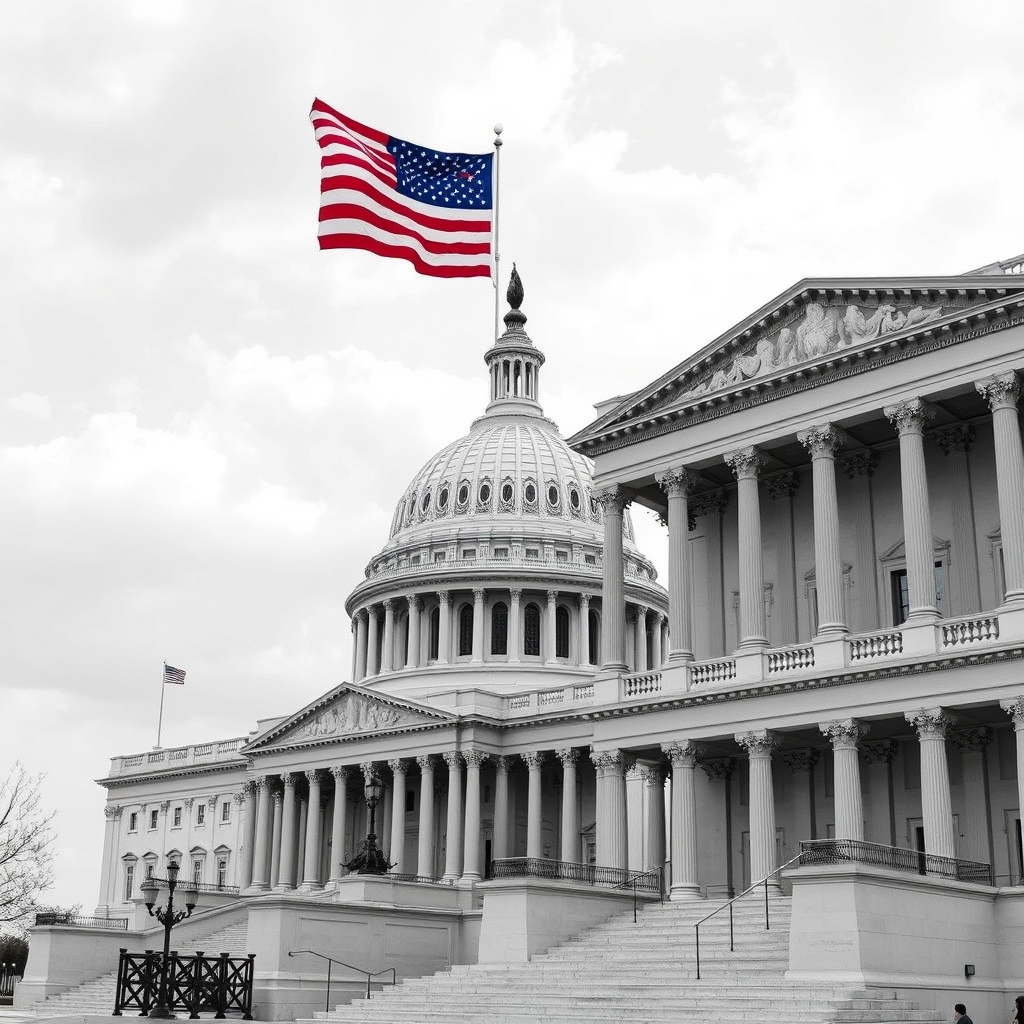
The CLARITY Act, the most comprehensive US crypto market structure bill in years, has stalled in Congress as four competing factions deadlock over how stablecoins should be regulated. For traders, the standoff means the rules governing stablecoin yield, token classification, and exchange oversight stay unsettled just as the market leans harder on dollar-pegged liquidity.
What Happened
The legislation has splintered into a four-way impasse. The disputes center on whether stablecoin issuers can pass yield to holders, which agency gets primary supervisory control, how supervision rights are divided between federal and state regulators, and how far the existing securities and commodities rulebook should stretch over digital assets.


The problem is structural rather than procedural. Each bloc holds enough leverage to block passage, so no single compromise satisfies all four at once. That turns what was meant to be landmark legislation into a fragile political standoff with no clear path to a floor vote.
What It Means for Traders
Stablecoins are the settlement layer of crypto trading, so ambiguity over their legal status ripples across every desk. The unresolved yield question is the sharpest: if issuers are barred from sharing interest, the incentive to hold regulated stablecoins over yield-bearing alternatives weakens, and capital may keep drifting toward offshore or tokenized-treasury products.
Uncertainty also carries a cost. Without clear jurisdictional lines, exchanges and issuers tend to plan conservatively, delaying product launches and US market entries. Traders should expect regulatory-sensitive assets — exchange tokens, stablecoin-adjacent projects, and compliance-heavy DeFi — to stay reactive to every policy headline until the deadlock breaks.
The Bigger Picture
The delay widens the gap between the US and jurisdictions that already have working frameworks. Europe’s MiCA regime is live and licensing companies, giving firms there a clearer runway. Every month the CLARITY Act sits stalled, the argument that the US is ceding ground on crypto policy grows louder.
Market structure clarity is widely viewed as the unlock for deeper institutional participation. Large allocators generally wait for defined rules before committing at scale, so a prolonged standoff can quietly cap the pace of new inflows regardless of where price sits.
The Bottom Line
The four-way deadlock is a reminder that US crypto policy is still being negotiated in real time. Traders watching stablecoin flows and regulatory-sensitive tokens will want to track how — and whether — the factions find common ground, because the resolution will shape the market’s structure well beyond this session.
This article is informational only and does not constitute financial advice.