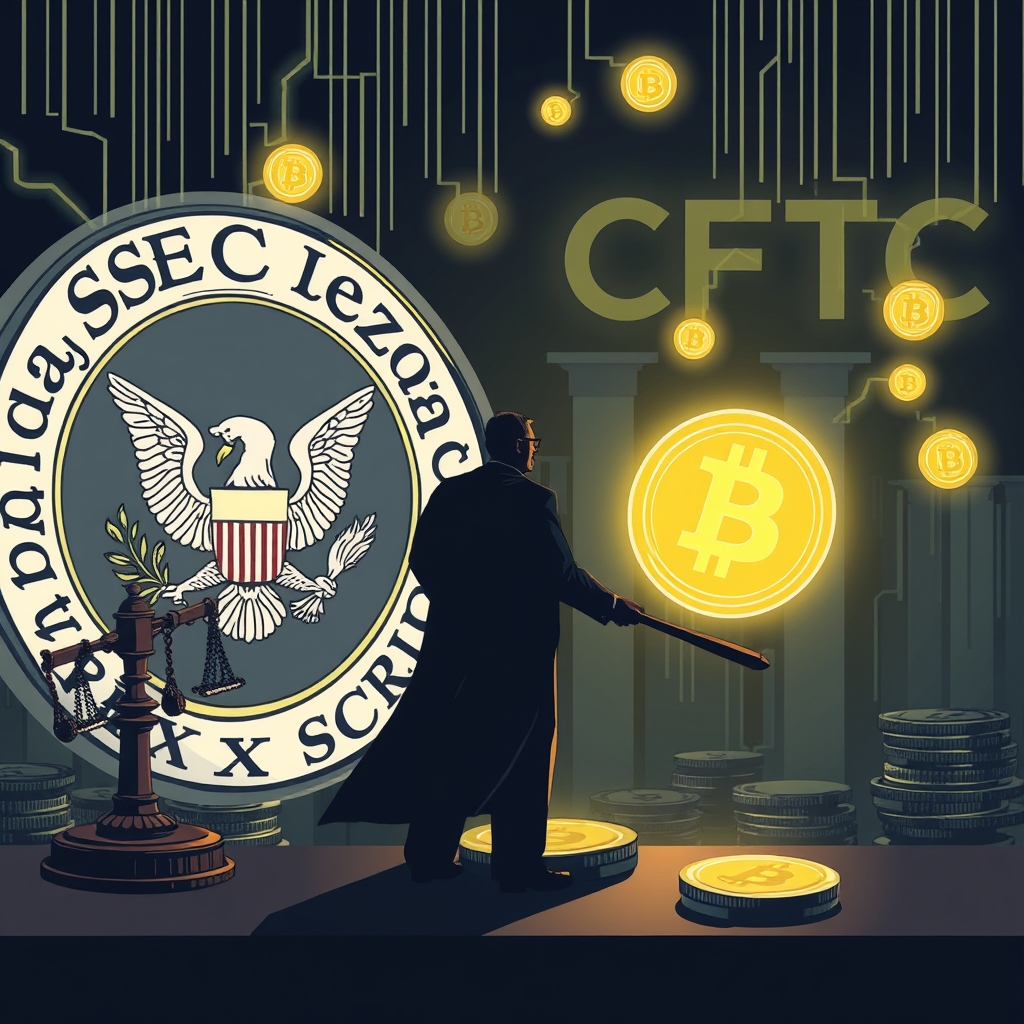
In the most consequential regulatory decision for crypto since the Howey Test was first applied to digital assets, the U.S. Securities and Exchange Commission and Commodity Futures Trading Commission jointly declared on March 17, 2026 that 16 major cryptocurrencies — including Bitcoin, Ethereum, Solana, and XRP — are digital commodities, not securities. For traders, this removes years of legal overhang that has suppressed exchange listings, institutional participation, and product development.
What Happened
The SEC and CFTC published a joint 68-page interpretive release on March 17, 2026 formally resolving one of the most contentious questions in financial regulation: how U.S. securities laws apply to crypto assets.


The 16 assets officially classified as digital commodities are: Bitcoin (BTC), Ethereum (ETH), Solana (SOL), XRP, Dogecoin (DOGE), Cardano (ADA), Avalanche (AVAX), Chainlink (LINK), Polkadot (DOT), Hedera (HBAR), Litecoin (LTC), Bitcoin Cash (BCH), Shiba Inu (SHIB), Stellar (XLM), Tezos (XTZ), and Aptos (APT).
The agencies defined a “digital commodity” as a crypto asset whose value derives from the programmatic operation of its underlying protocol and supply-demand dynamics — rather than from investor expectations of profit through the managerial efforts of others (the classic Howey Test for securities).
The ruling also clarified treatment for specific on-chain activities. Protocol staking, liquidity-pool transactions, lending, wrapping of non-security assets, and activity in non-custodial wallets are explicitly outside the broker-dealer reporting rules. The CLARITY Act, which passed the House 294–134 in July 2025 and cleared the Senate Agriculture Committee in January 2026, is now awaiting a Senate floor vote to codify these distinctions into statute.
What It Means for Traders
For exchange listings, the “not a security” designation means platforms no longer need to treat the 16 named assets under broker-dealer rules, effectively eliminating a major source of compliance cost and delisting risk. Traders can expect broader access to leveraged and derivatives products tied to these assets on U.S. venues.
For DeFi protocols, the explicit carve-out for staking, wrapping, and liquidity pools removes a major legal sword that had been hanging over yield-generating activities. Developers can build with more confidence, and investors can participate in DeFi strategies involving these assets without worrying that each transaction constitutes an unregistered securities offering.
XRP holders in particular will note the significance. After years of Ripple Labs’ legal battles with the SEC, XRP’s formal classification as a digital commodity closes that chapter definitively and reopens institutional use cases for the asset.
The Bigger Picture
This ruling represents the culmination of roughly a decade of regulatory ambiguity that forced crypto innovation offshore and chilled U.S. venture investment in blockchain projects. The classification framework — which divides digital assets into digital commodities, digital securities, stablecoins, digital collectibles, and digital tools — gives the industry a legible taxonomy for the first time.
The geopolitical dimension should not be ignored. The EU’s MiCA framework has been operational since late 2024, and jurisdictions like Singapore, UAE, and the UK have been aggressively courting crypto businesses with clear regulatory regimes. By issuing this guidance, the U.S. signals it intends to compete for crypto innovation leadership rather than cede it.
The SEC-CFTC digital commodity ruling is the most important regulatory event for crypto since ETF approvals. Traders should monitor the CLARITY Act’s Senate floor vote as the next catalyst that could lock these protections into law permanently.