


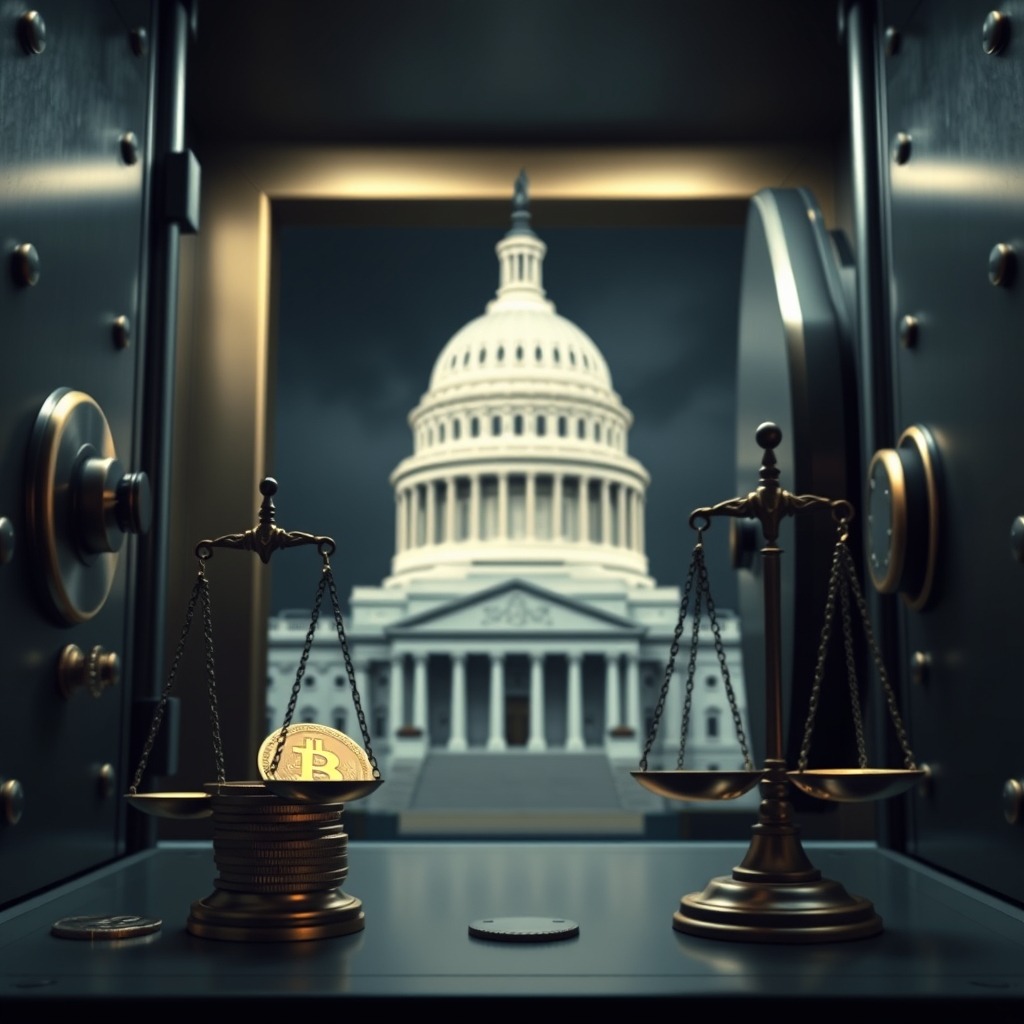
A new provision in the latest CLARITY Act draft takes direct aim at one of crypto’s strangest legal threats: the idea that dormant, self-custodied Bitcoin could be claimed by others under old lost-and-found rules. Section 20216 of the draft states that a self-custodied digital asset cannot become abandoned, unclaimed, or forfeited simply because its owner has not moved it. For holders of long-idle coins, and for a market watching a multi-billion-dollar case unfold, the stakes are unusually concrete.
What Happened
The provision responds to a lawsuit that leans on adverse-possession and finder’s-title concepts, legal doctrines historically used for physical property and unclaimed accounts, to assert control over roughly 3.8 million dormant Bitcoin. The core argument is that years of inactivity in a wallet could be treated like an abandoned asset waiting to be claimed.


The CLARITY language would slam that door shut. It specifies that a self-custodied asset cannot be deemed abandoned or subject to finder’s title solely because its owner has shown no recent activity, and it overrides conflicting state and local laws. In effect, holding Bitcoin quietly in your own wallet would be legally protected, not a signal of forfeiture.
What It Means for Traders
The most important number here is the 3.8 million coins in question. A meaningful share of Bitcoin’s supply has sat untouched for years, and any legal framework that could reassign ownership of dormant wallets would introduce a new and unpredictable form of supply risk. Clarifying that idle coins stay with their owners removes a tail risk that few traders had priced in.
Self-custody is the deeper theme. The provision reinforces the principle that controlling your own keys means controlling your own assets, without a clock ticking toward forfeiture. That certainty matters for long-term holders and for the confidence of anyone weighing whether to keep coins off exchanges. The regulatory direction of travel also builds on earlier milestones, including the ruling that classified major tokens as commodities rather than securities.
The Bigger Picture
CLARITY has been the centerpiece of the US effort to give digital assets a coherent legal footing, and its path has been anything but smooth. We tracked the bill through its make-or-break stretch in Congress, where timing and political will repeatedly threatened to stall it. The addition of a dormant-asset shield shows lawmakers responding to real-world legal pressure rather than drafting in the abstract.
If enacted, the provision would set a precedent that self-custody is a protected form of ownership under federal law, insulating it from a patchwork of state rules never designed for cryptographic assets. That is the kind of foundational clarity that can reduce legal overhang across the entire market, even for holders who never touch the coins in dispute.
The Takeaway
The dormant-Bitcoin clause is a small piece of a large bill, but it addresses a threat that strikes at the heart of what self-custody means. For traders, the signal is that US lawmakers are moving to protect idle holdings rather than expose them, closing a legal loophole before it could reshape supply. Whether CLARITY crosses the finish line remains the open question that will decide how durable this protection becomes.
This article is informational only and does not constitute financial advice.